
About 600 million people visited during the MahaKumbh in the year 2025.
Why are you even thinking of going to such a place? Are you not worried if the place would be clean? How about waste management! Wouldn’t it be a disaster? Kumbh is not that important, the hype is created by the ruling political party, one stampede happened, what if another happens? Where will you stay? Isn’t it super crowded? You will be stuck in traffic jams, what if the Kumbh starts some sort of pandemic?
Rolling eyes and many questions were pointed at me before I finally started.
I am not sure what majority felt and observed. I am just noting an account of my personal experience. There is no claim that I intend to make that these experiences were generic.
I was lucky enough to get access to a comfortable and quick flight that landed me in Prayagraj- the host city itself.
Even though there was certainly a possibility of getting stuck in the traffic jams out in the city, we could get pass through and reach the place near MahaKumbh Mela. A huge parking space welcomed us. We were informed that entry to the vehicles was restricted in certain areas. Our first pilgrim walk started from the parking area to the tent where we were supposed to stay.
Our entry to the ‘Kalagram‘ (Art Village) on foot mesmerized me.
During Mahakumbh 2025, a huge area in the Prayagraj city on the bank of the Sangam (Confluence) was temporarily developed as Kalagram (Art Village).
It was a vibrant showcase of India’s rich cultural heritage. This sector was designed to highlight Indian handicrafts, cuisine, performing arts, and traditions, offering visitors an immersive experience through exhibitions, performances, and interactive zones. The idea was bringing together diverse artistic expressions allowing visitors to experience India’s cultural diversity and promote tourism.
I lived at a grand tent house at the art village… so far from the concept of a yogi life!
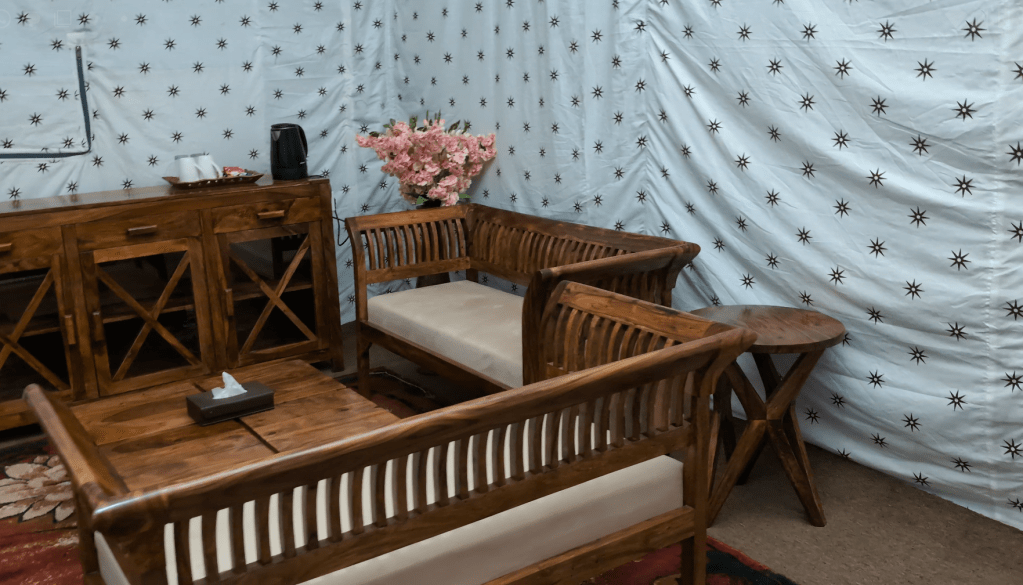
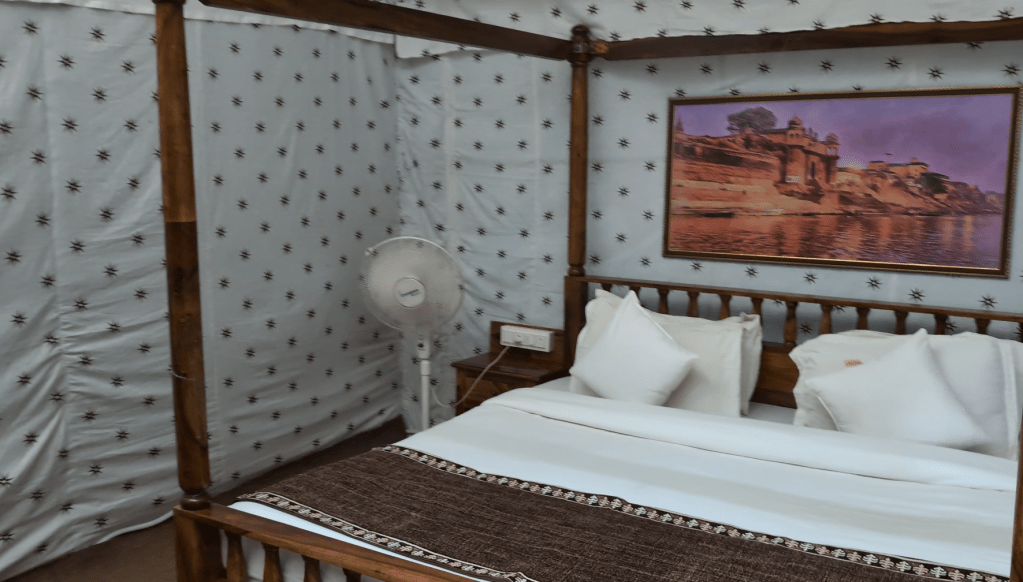
Moving on…
Temporary but quite huge and organized free hospital camps were built in the Kalagram for social welfare. We did contribute a bit and offered some volunteering.
I visited the camp setups created for the specially abled people and witnessed free wheelchair distribution, prosthetic organ consultation (and may be even distribution).
Rapid development and management of such facilities provided confidence to me as a citizen that my country is in a good position to manage not only grand events but survive possible future natural or man-made calamities.
MahaKumbh was an example of event management. With successes and failures in the process, I am sure the respective teams have gathers mammoth experience.
MahaKumbh and the Kalagram obviously provided a platform for many to engage in intellectual discussions with spiritual seekers, philosophers, and scholars at spiritual camps for those who wanted. We saw camp boards for various Ashramas, Sikh and Jain communities too. There was also a Tirupati Balaji temple set, quite real… At some places, free shelters were provided to the pilgrims.
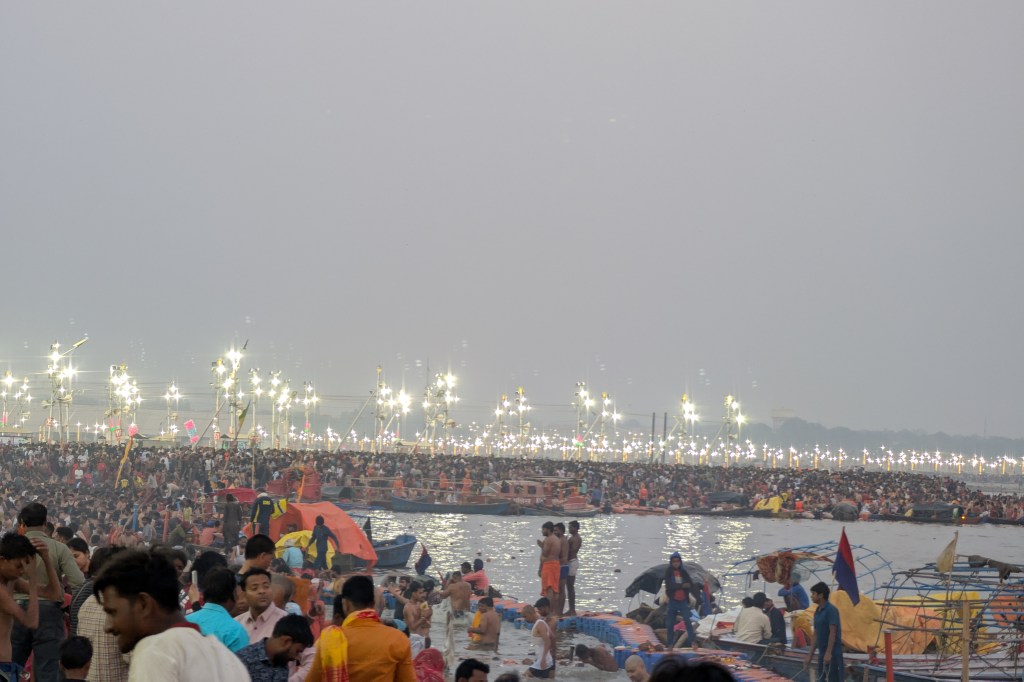
Walking the long walks to the riverbank was such an experience! Crowds chanting hymns, people carrying kids on the shoulders, families holding hands together, hundreds of hands in the air raised not only for worship but also to capture photos and selfies!!
There were hawkers on both sides of the long roads pitching and promoting grabbing attention of their customers (including me, not very much for the items on sell but more for their wacky offbeat (in a good way) Hindi dialect of Allahabad :D) to sell goods starting from food, books, toys, flowers and what not. It was quite a sight to take in all at once.
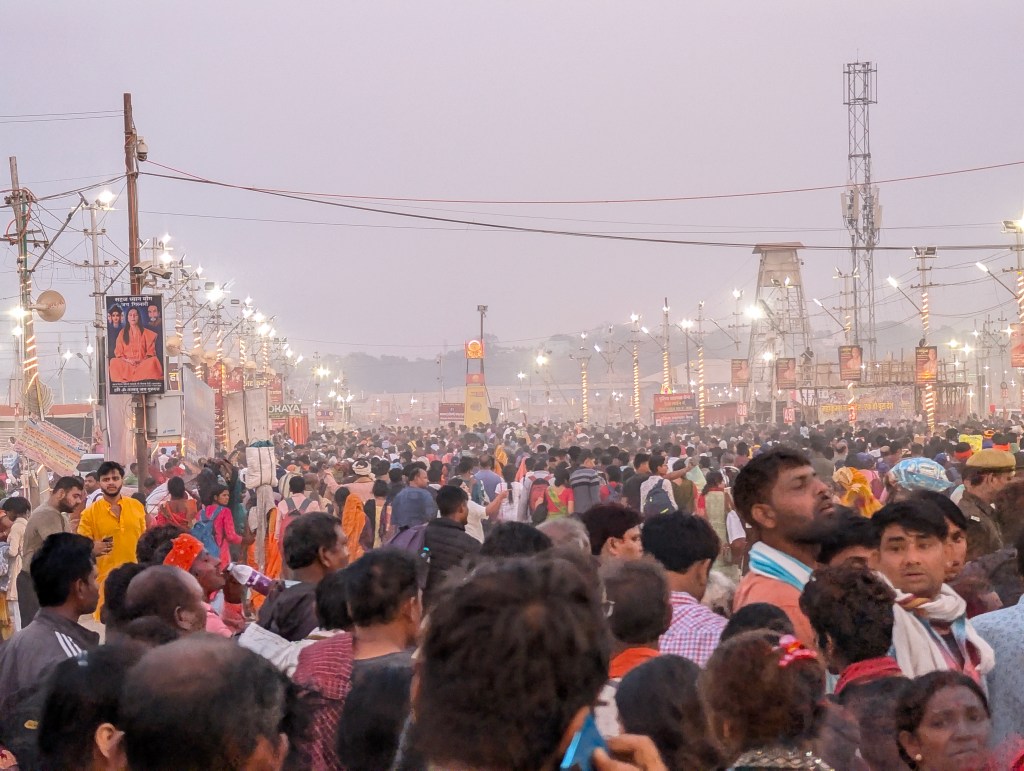

Crowd of 600 million people are capable of creating a major mess. But, if not squeaky clean- the Prayagraj city, the riverbanks and the water were close to not polluted.
The machines were straining the flower and other offerings from the river water to keep the water clean. (One can clearly see the milky water from Ganga getting immersed in the clear water of Yamuna in the photograph below)

Sanitation and waste management must also have been a mammoth task. I personally came across close to no instance where I had to witness mismanagement of waste or negligence of the crowd towards the topic of sanitation.
Hats off to the tirelessly working cleaning staff sweeping the roads day and night.
There was decent crowd management by the police through multiple check points.
Talk about the crowd management and safety management on the river.. it was there!
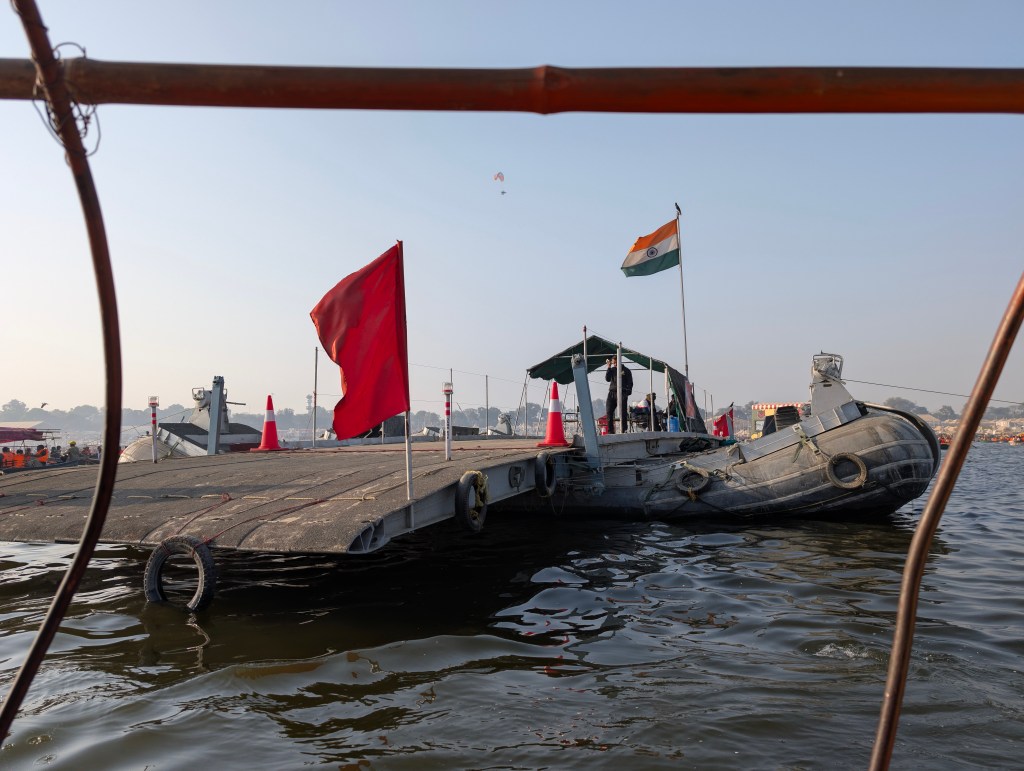
Indians reading my experience must have heard of the funny ‘Hum Kumbh ke mele me bichad gaye the‘ (We were separated in the Kumbh Mela) dialogue 😀
Well, with so many people around, why is that not possible? However, it was a relief to witness the ‘announcements’ from lost and found booths placed literally at every corner.
I felt proud that, we, as a society are capable of A LOT if we submit to the cause.
Was it all so up to the mark? Well, not really, we read news about a major stamped that happened in the beginning of the MahaKumbh. We also read in the news of about 1-2 instances of fire in some shops. If you ask some local resident who did not gain money or employment out of Kumbh, I am sure the experiences would be frustrating. It must have put a very high strain on the resources of the city. People living around must have asked only one blessing at Kumbh Mela – ‘Give us our normal life back!!!’ All very unfortunate, for sure.
I experienced people finding opportunities to gain more money out of the business transactions, at times hundreds of vehicles on the roads honking tirelessly creating frustration and panic, There was no up to the mark display of boards on many places to show directions, I heard about some pickpocketing instances, in a few events, I experienced people lying and showing self-centeredness, private transport and boatmen charging a lot extra money for rides, People selling high priced food… the list goes on. I jokingly told a lady selling very expensive tea at a stall that, “I have never had such expensive tea in my life”, with an awkward face and innocent smile she said, “I know, even I go out to cheaper places to have tea. I have to sell at this price, it’s not my shop!”.
It takes policies and organizational structures to run a corporation where good and bad is controlled at minutest levels. But Kumbh, to a great extent, an event that gets driven by self-inspiration and motivation of masses. We have to accept the good and the bad and register both.
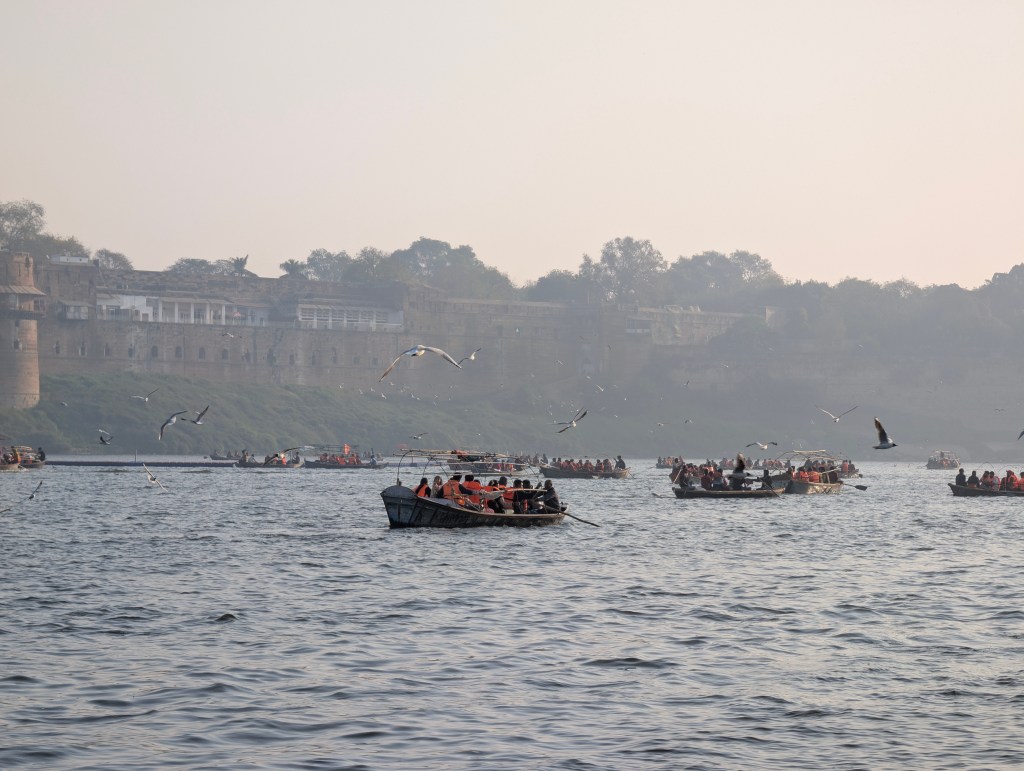
Taking a boat ride at the Triveni Sangam (Confluence of 3 rivers) in Prayagraj early in the morning was one of the most divine and mesmerizing experiences for me. The milky white Ganga meets the Yamuna with deep blue but clear water. One can see the clear distinction of the two flows of water. Somewhere, the Saraswati that flows underground unites with the rivers on the ground. This confluence forms a grand river channel.
Birds flying on the river on the backdrop of the beautiful Allahabad fort and old temples altogether carved an image on the mind.
The boat ride not only offered breath-taking views of the vast Kumbh gathering on the riverbanks but also provided peaceful spiritual moments of reflection.
The dip in the water and moments of tranquility gave an opportunity to wish for a happy and healthy life for loved ones.


Moving on, this MahaKumbh was not just a religious or cultural event; it was also a major economic powerhouse that generated massive financial activity in multiple structured business sectors like travel and tourism, food industry, retail, handcraft, etc. It generated employment for thousands.
There was massive increase in turnover in the unstructured economic sector. I am sure it gave a boost to the local businesses. The roadside hawkers and small unregistered businesses flourished. My casual conversations with such business personnel gave me insights on how the Kumbh Mela has given them opportunities to thrive and with the economic surplus created in short period of time, how their lives will go on becoming better. One such person I talked to was planning to buy a new 2-wheeler vehicle which would help him in his profession. Other was going to be able to pay school fees for kids. Some mentioned that, with the surplus money earned, their daily food expenses would be taken care of for months and the energy can now be focused in finding a better job.
Last and the best-
Not only the Sangam (Confluence) of the rivers but one more Sangam (Confluence) existed that made this MahaKumbh more fascinating for me. The Sangam (Confluence) of culture (way of life), religion and technology.
Digital Kumbh transformed the pilgrim experience.
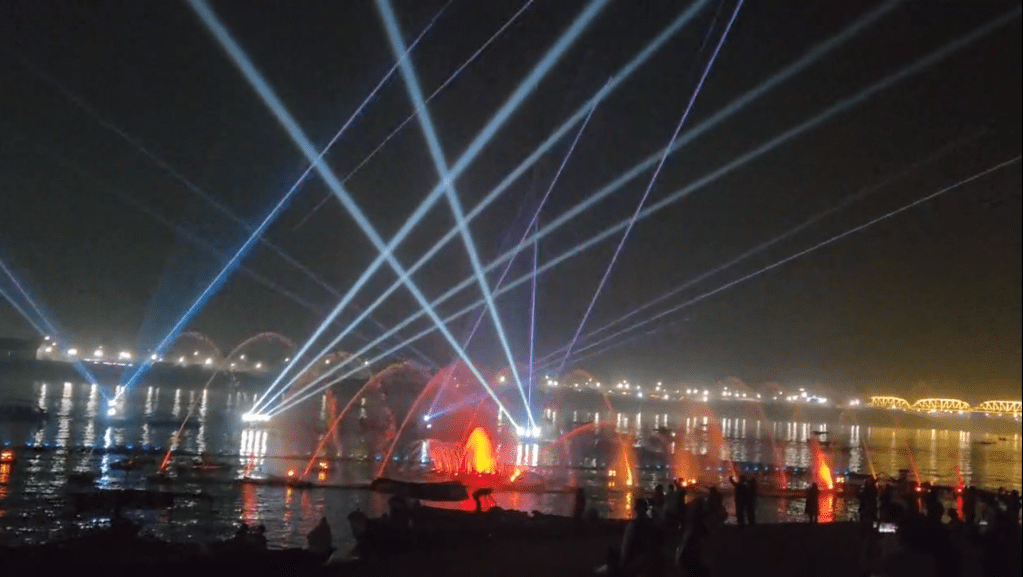
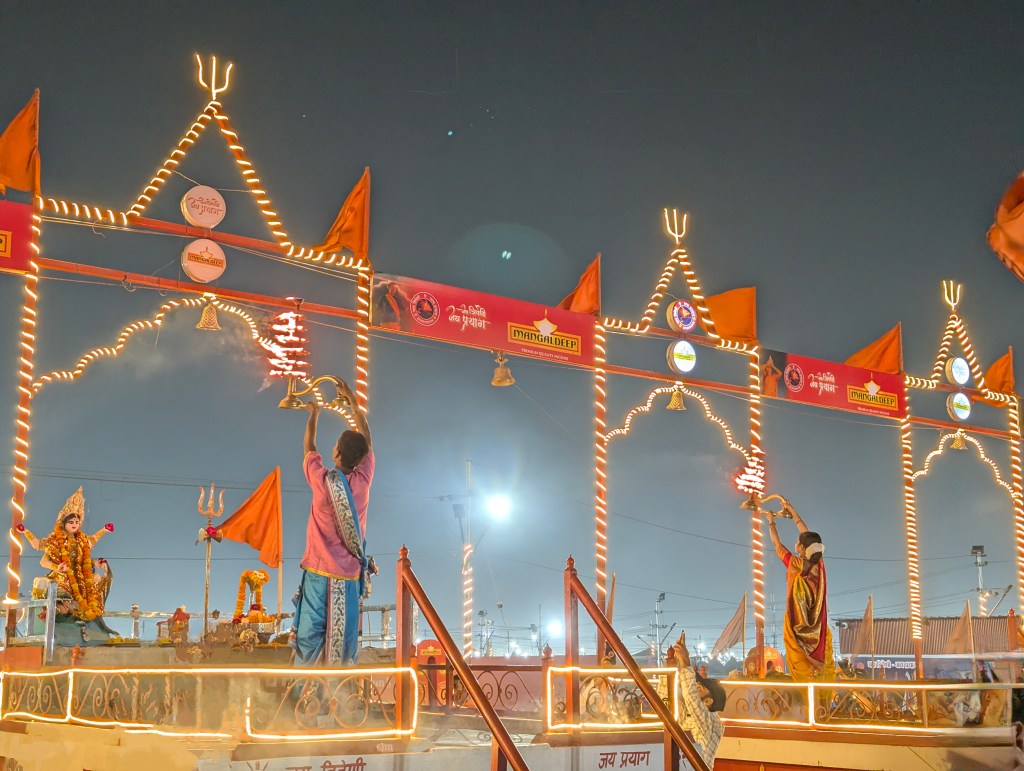
The light and laser shows, Screens put up in temporary setups build to show short films on the mythology, astrology related to MahaKumbh. Exhibition showcasing artistic photographs captured at various Kumbh Melas. VR type of setups to give you a feel of the river ghats, display of the detail information on various Akharas, planetary positions! I was a kid in the candy store.



Well, isn’t Kumbh to internalize thoughts, travel inside your own mind, introspect, have Yogic experiences? – one may ask.
Doesn’t attachment to material pleasures creates desires, which in turn cause suffering? Was I not supposed to go away from the indulgence at Kumbh? Well yes, but here I was, enjoying all of it…
Luckily, Hinduism at its core is one stop shop for all. It lets you understand the world in your own way and infer based on your experiences. So, why not have some digital entertainment on the side for a few who are looking to reach their destiny by taking other route? (On a lighter note- Looks like I am not ready yet, I need a few more lives to reach to the no-indulgence state of mind :))
Apart from the use of technology for entertainment, it was also used in managing the event. CCTV to drone monitoring, live streaming, virtual darshans to helicopter darshans, AI & Smart surveillance for crowd management, digital payments, phone apps to navigate through Kumbh– the event set a new benchmark for religious tourism in India.
This experience helped me reassure that you can be a part of modern advancements without letting go the grip on the roots.
I am sure the world would look at this Kumbh Mela as an unparalleled case study with multiple intriguing aspects like spirituality, management, economics, technology, sociology, anthropology and event management
Personally, for me, the Kumbh Mela was a living museum of India that I would love to visit again…. and who knows, I may find my road to enlightenment in the next one!
References:
Kumbha_Parva_Mahatmya_By_Kapil_Dev_Dwivedi_1986_Gyanpur_Vishw_Bharati – Adobe cloud storage
KUMBH MELA A LIVING CLASSROOM FOR POSITIONAL ASTRONOMY – ScienceIndiamag
From Myth to Science: Unveiling the True Origins of Chakras – the Conscious Vibe


 नेति नेति (Neti Neti)
Leave a reply to Hemkant Yeole Cancel reply