Blog

  • In the Era of Cognitive Crutch: Would We Have the Next Aryabhatta?

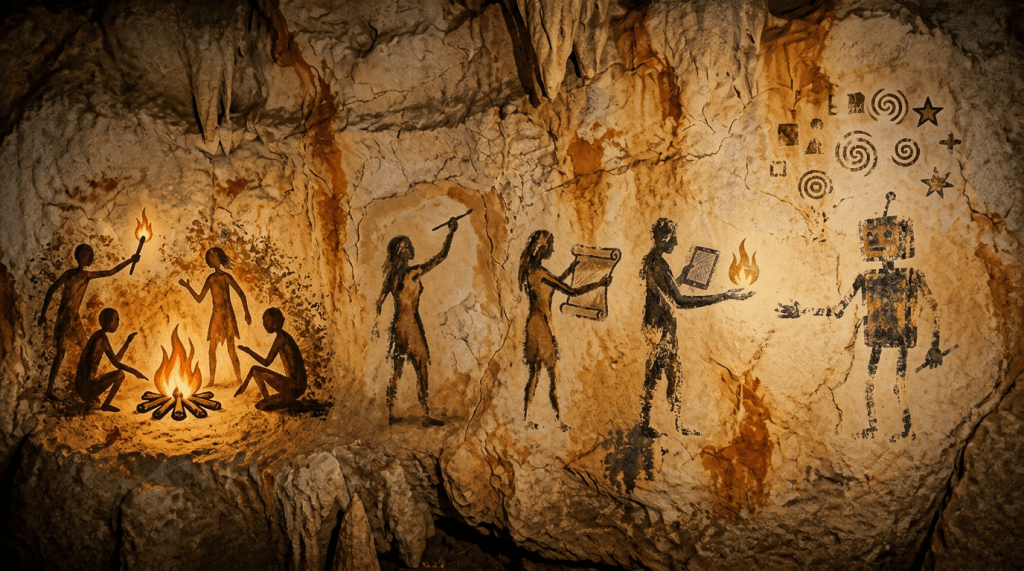
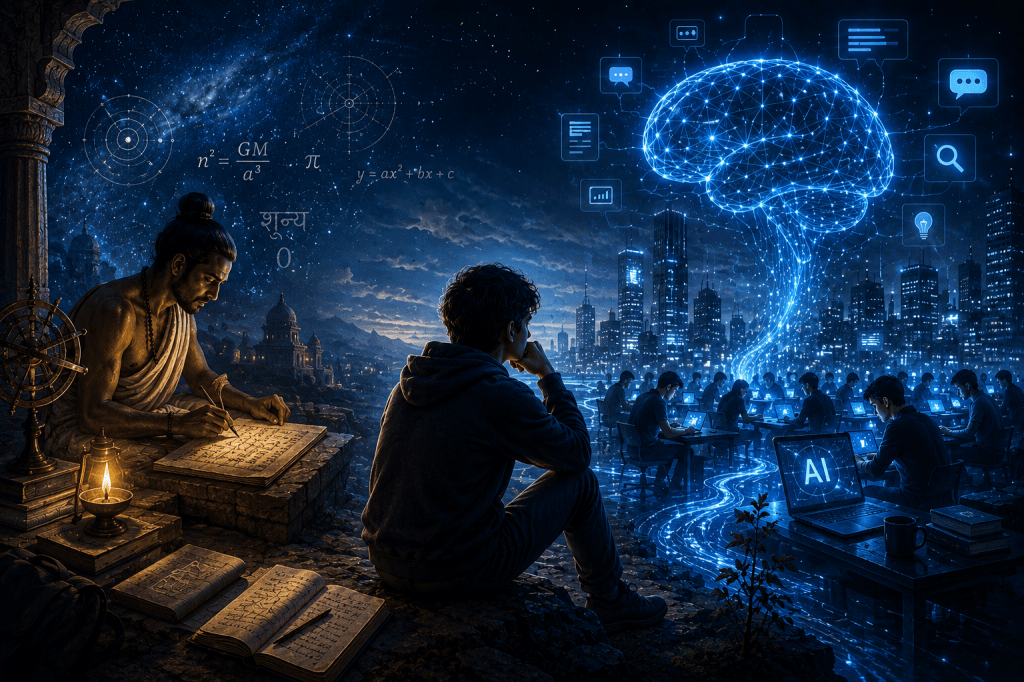
    *Image Reference: Generated using ChatGPT

    Disclaimer:
    The views expressed in this blog are personal. Research papers, institutional studies, and reference links have been included wherever applicable to support technical concepts, statistics, and scientific discussions presented in the blog.

    Somewhere in fifth-century India, a mathematician was wrestling with an idea civilization had never fully formalized before- representing nothingness itself! He wasn’t prompting a tool. He was doing something rarer and harder- holding an unresolved question in his mind long enough, uncomfortably enough, that an entirely new idea had room to emerge. We call it zero. Zero was not discovered by Aryabhatta, it was endured. We built the modern world on it. The question worth asking now is whether that kind of thinking- born entirely from struggle, silence, and sustained discomfort is still possible. Or whether we are quietly engineering the conditions that make it less and less likely.

    Human breakthroughs were never purely about intelligence. Humans learned to control fire, invented the wheel, developed astronomy, created music systems, Sushruta performed remarkably advanced surgical procedures centuries before modern medicine. Visionaries like Van Gogh, Monet and many others in the era shattered centuries-old artistic doctrines in realism and brought revolution in art. Socrates transformed philosophical inquiry by questioning accepted truth itself. What they all shared was not access to tools, but the willingness to sit with difficulty long enough to see what others had missed.

    For the first time in human history, we have created a technology that does not merely store information or automate physical labour. Large Language Models (LLMs) participate directly in reasoning, articulation, synthesis, brainstorming, communication, and ideation itself. The printing press changed how humans distributed knowledge. Search engines changed how humans retrieved knowledge. Now, Generative AI may fundamentally change how humans produce thought.

    That distinction matters. Because The central question is no longer, “Will AI improve productivity?”, the deeper question is: What happens to human cognition when thinking itself becomes partially outsourced?, What happens when impatience for quick answers replaces the habit of sitting with struggle, uncertainty, and deep thought? When speed begins to earn more recognition than depth, and getting work done becomes more important than truly understanding or creating it ourselves?

    An Aryabhatta-level breakthrough requires someone to reject the prevailing consensus entirely. Will offloading thinking restrict human innovation or might AI actually accelerate the next “Aryabhatta”?

    How LLMs Work?
    At its core, a Large Language Model (LLM) is a highly sophisticated statistical pattern recognition machine. It possesses no consciousness, biological understanding, or internal grasp of factual reality. The fluency of the outputs produced by generative AI/LLMs is so convincing that humans naturally anthropomorphize the system and assume understanding exists underneath the surface. It does not.

    Imagine someone says to a child, “Once upon a…”. The word follows in the child’s mind is “time!”. When someone asks AI to complete the same sentence, AI would also most likely say “time”. But what’s happening inside is fundamentally different.
    The AI is a gigantic math machine. It has read billions of sentences before. So, when it hears “Once upon a…”, it calculates the next word based on probability: “time” at 80%, “road” at 30%, “mango” at 10% (numbers illustrative). Then it picks one. That’s mostly what an LLM does- pattern prediction using artificial neural networks trained on mammoth data.

    The model continuously predicts the most probable next word based on the sequence of words that came before it. Those probabilities are not fixed — they shift dynamically based on context, known as conditional probability. “The astronaut stepped onto the…” makes “Moon” highly probable. Change it to “The chef carefully placed the…” and now “cake” or “plate” dominate. This constant reshaping of probability based on context is why LLMs feel remarkably conversational.

    One more layer matters, that is, the temperature. Temperature acts like a creativity dial for LLMs. At low settings, the LLM model chooses the safest, most probable words — stable and predictable. At higher settings, it explores lower-probability choices. Ask it to complete “The pirate opened the treasure chest and found…” at low temperature: “gold coins” At high temperature: “a dancing chicken wearing sunglasses”. The knowledge is identical. What changes is the model’s willingness to deviate from the statistical average. This creates the illusion of a creative spark but it is actually just manufactured randomness. The machine is never truly inventing. It is rolling a “weighted die” based on the mathematical average of human data it has already seen.

    This is worth holding onto as we go further. Because the question of what AI can and cannot do for us begins here- not with its outputs, but with its fundamental nature.

    How Human Brains Work?
    When a child hears “Once upon a…”, she too is recognizing a pattern from stories she has heard before. But along with that, something entirely different happens. Her brain may remember grandma telling stories. She may already imagine what this story will be- the one with fairies, forests, or dragons. She feels curiosity, connects emotions and memories, asks questions, experiences fear, invents something completely new.

    Both humans and LLMs recognize patterns, predict what comes next, learn from examples, and improve with more data. But the human experience of pattern recognition creates meaning. It associates data with experience, goals, fear, curiosity, survival instincts, emotions, physical sensations, consciousness, and self-awareness. Your brain also uses probability, but it assigns meaning to that probability, and then it cares about the outcome.

    Take an example of Van Gogh’s impasto technique — paint laid so thick it became almost sculptural. It did not come from studying what was already accepted or data already available. It came from something felt. Whether rebellion, exclusion, or simply a compulsion to express the world exactly as he experienced it, the origin was very human and interior. I won’t be precise about his history- that’s not the point. The point is that something original emerged from something felt. An LLM generates by pattern. It does not feel. And so far, nothing it produces has needed it.

    Humans bring grounded understanding we learn from physical reality, consequences, pain, risk, and reward. We bring intent and judgment; we decide what matters and take responsibility for outcomes. We reason causally in messy, incomplete environments where the rules keep changing.
    No LLM does any of that. It responds and we decide. AI is probabilistic, not deterministic.

    What Is Needed for Human Brains to Be Creative?
    What is fascinating is that thoughts and breakthroughs rarely emerged from comfort or efficiency. They emerged from unresolved problems, intellectual obsession, necessity, prolonged uncertainty, deep observation, and intense conceptual struggle.
    But here’s the catch. The human brain is an energy-conserving system that runs on just 20 watts of power. It naturally minimizes heavy cognitive processing and constantly seeks the path of least resistance, a phenomenon called cognitive offloading. The brain operates on the “law of least effort”. When faced with a complex task, the neural network adapts by instinctively defaulting to easiest option. Do you experience your brain taking an “I’ll just google it!” or “Let me ask AI!” pathway more and more frequently? Over time, this makes independent problem-solving feel more difficult and mentally draining, creating a dependency loop where the AI-consulting reflex becomes deeply ingrained. However, if used and challenged continuously, the brain thrives.

    While AI tools save time, if not used for right reasons, the risk is that we outsource our deep thinking, planning, and memory to them. Studies from MIT and Harvard suggest that overusing generative AI for critical thinking or writing can reduce brain activity, erode long-term learning, and make it harder to retain information.
    The concern is not hypothetical. Researchers are increasingly investigating whether excessive cognitive offloading to AI may contribute to forms of cognitive atrophy over time.

    Breakthrough ideas require intense conceptual friction, synthesis, and deep incubation. Current generative systems risk homogenizing human thought and fundamentally alter how we construct an entirely new idea.
    Cognitive friction is the mental resistance or struggle you experience when working through a difficult problem — the discomfort of not knowing, the effort of figuring something out, the slow grind before clarity arrives. Cognitive friction matters. Modern society tends to treat friction as inefficiency. We celebrate speed, optimization, automation, and convenience. But not all friction is waste. Some friction is psychologically necessary. A musician struggling unsuccessfully with melodies for months may eventually discover an entirely new sound. A mathematician wrestling with incomplete structures may suddenly see a hidden pattern. A writer spending weeks unable to articulate an idea may slowly arrive at genuine clarity.

    Historically, deep insight often emerged from prolonged unresolved tension. AI removes much of that friction. That is simultaneously its greatest strength in some professions and potentially its greatest cognitive risk in others. Because while AI may optimize the production of answers, it may unintentionally weaken the mental conditions under which originality historically emerged. The danger may not be that humans become unintelligent. The danger may be that humans stop practicing difficult thought long enough to develop deep insight.

    To be fair, there is a counter-argument worth taking seriously. Some researchers argue that AI actually helps expands creative range- that having a tireless brainstorming partner lowers the activation energy for ideas and exposes thinkers to combinations they would never have encountered alone.

    The honest answer is that it depends entirely on how AI is used. AI when used as a sparring partner builds cognition. But AI used as a ghostwriter quietly erodes it. The tool is the same. The posture is everything. While this blog acknowledges optimistic possibilities, it focuses on the growing trends and challenges within the broader AI consumer base.

    How AI-Led Content Creation Could Limit Us?
    Fresh AI trains on new human-made content on the internet. Generates content based on it. Eventually, content created by AI increases. AI now generates content based on content created by AI. Creativity limits. Experts have named this phenomenon as “model collapse”.

    While AI tools expand the overall volume of generated ideas, the structural novelty and variety of that content decreases over time. Model collapse is what happens when AI begins feeding on its own output each generation of training data slightly less human, slightly less varied, slightly less real than the last. The loop tightens. The range of ideas narrows. The machine begins to dream only of itself because they are trained recursively on data generated by preceding AI models rather than on organic, human-created data. The idea is, the variety of ideas and originality will shrink by addition of less and less human produced data in the training data set.
    As the internet becomes flooded with LLM-generated text, future AI models will inevitably scrape this synthetic content. This forms an intellectual closed-loop system. If human innovators outsource their brainstorming to these models, they subject their brains to a narrowing intellectual field. This drastically stunts the cognitive deviation required to invent a truly new idea.

    The irony is sharp: the more we rely on AI to think for us, the less original the thinking AI has left to learn from.

    What Areas Is AI Really Good For?
    Let’s be honest about where AI genuinely earns its place — because it does earn it, in ways that matter enormously.

    Think about what it means for a doctor to detect cancer from a biopsy image in minutes- a process that would take a human pathologist several hours. Or for a neurologist studying Alzheimer’s to get a risk prediction from something as simple and non-invasive as a recorded conversation- no expensive scan, no months of waiting. Researchers at the University of Sheffield built exactly that: a tool called CognoSpeak that identified dementia with 90% accuracy just by analyzing how a person spoke. A meta-analysis of 83 studies published in Nature Digital Medicine found AI diagnostic accuracy already on par with non-expert physicians not yet at the level of specialists, but closing the gap in ways that would have seemed implausible a decade ago. These are not incremental improvements. They are compressions of time and scale that free human experts to do what only humans can make the judgment call, sit with the patient, carry the responsibility.
    Now zoom out further. Astronomers at Oxford built an AI tool that filtered over 30,000 alerts from space telescopes, missing fewer than 0.08% of real supernova signals reducing the load on human researchers by 85% while losing almost nothing. As Stanford’s KIPAC puts it, upcoming surveys like the Rubin Observatory will generate datasets so vast that traditional analysis techniques simply cannot exploit them, AI is no longer optional in astronomy, it is the only viable path forward. The same story plays out in banking, where AI spots fraud patterns buried in millions of transactions that no human analyst could track in real time, and in cybersecurity, where systems monitor network behavior continuously in ways no team of people could sustain.

    The pattern is consistent: wherever the bottleneck is volume, repetition, or finding signals buried in overwhelming amounts of data- AI wins. Not because it understands, but because it is fast, it doesn’t get tired, doesn’t get bored, and doesn’t need the work to mean something.

    How Are We Adopting AI in Our Organizations?
    Leaving the exceptions aside, walk into an organization today and you will find the same scene. Dashboards tracking AI usage. Leadership decks celebrating adoption milestones. Someone in every meeting mentioning their team’s token consumption like it’s a fitness score.
    There is AI utopia everywhere. But scratch beneath the surface and the picture gets uncomfortable.

    Part of the problem is what we are choosing to measure. Many organizations have settled on token usage as their proxy for AI maturity- how much are people using it, how often, at what volume. It is not entirely wrong, but it is dangerously incomplete. A metric that can be gamed will be gamed! And so, a quiet, troubling trend has emerged: people inflating usage counts to meet mandates and hit performance targets optimizing the scoreboard rather than developing the skill. Microsoft’s 2025 Future of Work research captures why this happens: workers resist top-down AI mandates that prioritize efficiency above quality and creativity. When adoption is imposed rather than understood, compliance replaces genuine engagement.
    The cultural debate around all this mirrors a very human pattern. In some teams, using AI is quietly frowned upon- seen as laziness, as cheating, as a shortcut that real professionals don’t need. In others, not using it is frowned upon- seen as resistance, as falling behind, as naivety. People get criticized no matter what they choose. But this debate is a distraction from the question that actually matters: is any of this building genuine capability, or just generating activity?
    The cultural pressure lands hardest on the people who can least afford it- the youngest people in the workforce.

    A fresh graduate joining a team today is unlikely to be told: here is a problem, work through it, struggle with it, come back when you have tried. They are more likely to be handed an AI tool, pointed at a token target, and measured on throughput. The uncomfortable question nobody is asking in these organizations is: what exactly is being learned? Because what looks like productivity is often something else entirely- the fluent reproduction of AI output by someone who does not yet have the foundation to know whether it is right, relevant, or dangerously incomplete.
    This is how a generation develops what might be called AI dependency before expertise. Not through laziness- these are motivated, capable people but through a system that optimizes for output before capability is built. They learn to prompt before they learn to think. They learn to review AI-generated code before they have written enough of their own to understand what they are reviewing. They learn to ask the machine before they have developed the instinct to ask themselves. Do you recognize that ‘Let me google or I’ll ask AI to write that quick email’ feeling?

    The numbers quietly confirm what is happening on the ground. Early-career workers aged 22–25 in AI-exposed roles have seen a 13% relative decline in employment. Entry-level postings have been cut in some sectors. Organizations are eliminating the very roles that used to be where expertise was assembled- the unglamorous, repetitive, foundational work that turned a graduate into someone who actually understood how things functioned. Are we removing the on-ramp and preparing ourselves to wonder in future why people can’t navigate the highway.

    What makes this particularly dangerous is that the loss is invisible in the short term. A junior analyst who has never learned to structure an argument can still produce a well-structured document with AI assistance. A developer who has never debugged their own code can still ship working software. The output looks fine. The capability gap underneath it doesn’t show up until the moment it matters most- when the AI is wrong, when the problem is novel, when nobody in the room actually understands what the system is doing or why.

    We are, in effect, building a generation of very capable operators of AI and a shrinking number of people who can think independently of it. That is not a workforce problem for five years from now. It is being quietly assembled today, one unguided adoption mandate at a time.

    What Happens Next And What Governance Do We Need?
    “To AI or not to AI?” that’s not the question here. It’s not a “mind or machine” fight. We are standing at a “mind aided by machine” juncture. But that juncture requires deliberate choices because the default path, left unmanaged, does not lead somewhere good.

    Here is a paradox worth sitting with. Employers anticipate that 39% of core skills will change by 2030. In response, 82% of enterprise leaders say they are already providing AI training. Yet 59% still report a significant and growing skills gap. More training, same gap. The reason is not hard to find: teaching someone to use an AI tool is not the same as building the underlying capability the tool is meant to augment. We are handing people a calculator and calling it a mathematics education. Teach how to ask ChatGPT to write code, but don’t teach what are unique ways in which AI writes code and how the loopholes can be found in it.
    The organizational risk that follows is not abstract. ISACA describes it plainly a company that routinely relies on AI to complete daily tasks may gradually lose its own understanding of how those tasks actually work. Personnel stop knowing how the system functions. Decisions get made by people who can evaluate AI output but no longer fully understand what lies beneath it. That is not a productivity gain. That is institutional fragility dressed up as efficiency.

    So, what does responsible adoption actually look like? Here are not abstract principles but concrete shifts organizations need to make most of which cost nothing except the willingness to think beyond the quarterly adoption scorecard.
    Sequence AI access by experience, not just by role- The most consequential governance decision an organization can make is deciding when in someone’s development journey AI tools become available for a given task. A junior developer should write code, break it, debug it, and understand it before AI scaffolds the solution for them. A new analyst should structure their own argument before AI polishes it. Junior professionals should be able to demonstrate and articulate a thought process before AI aids their document writing. This is not about withholding tools, it is about sequencing capability before convenience. Practically, this means defining, for each role and each skill domain, what foundational experience must be demonstrated before AI assistance is unlocked for that task. Think of it like a driving license- you learn to control the vehicle before you get cruise control.

    Redefine what you measure- Token counts and completion rates measure activity, not capability. Organizations serious about sustainable AI adoption need a second set of metrics alongside usage data: are people making fewer errors over time, or just better-looking ones? Are junior staff developing independent judgment, or deepening dependence? Are code reviewers able to explain and challenge AI-generated output, or simply approving it? Simple interventions help here- periodic “no AI” tasks where individuals solve problems independently, used not as a punishment but as a calibration tool to surface where genuine skill exists and where it has quietly eroded.

    Redesign the learning pyramid, not just the org chart- The traditional pyramid assumed that volume of work is done at the bottom to build the expertise that rose to the top. AI has hollowed out that bottom layer. Now the work done by the junior most workforce is getting replaced by AI, you don’t need developers, you need reviewers! Isn’t the org pyramid already becoming a rhombus? It’s not a stable structure that can sit on the ground. Skill building was happening organically, organizations now need to deliberately build it through structured apprenticeship programs, mandatory code-writing rotations before code-review roles, writing workshops before AI-assisted documentation becomes standard, and design-from-scratch exercises before templates and generators are handed over. This is not nostalgia. It is pipeline maintenance. The senior reviewers, architects, and decision-makers of 2035 are the junior staff of today and they need the foundational friction now, while there is still time to build it in.

    Make “AI as sparring partner” a cultural norm, not an exception- The most valuable shift in how AI gets used day-to-day is not in the tools themselves but in the posture. Organizations should actively train and reward the habit of challenging AI output rather than consuming it. This means asking: what is the AI missing here? What assumption is it making? What would I have done differently and why? Some forward-thinking teams have already introduced a simple rule: before submitting any AI-assisted work, the person must be able to explain and defend every substantive claim or decision in it. If they cannot, it goes back. This single norm, consistently applied, transforms AI from a shortcut into a genuine learning accelerator.

    Build governance architecture before the debt accumulates- Governance retrofitted onto embedded systems is far harder than governance designed in from the start. At minimum, every organization deploying AI at scale needs three things clearly defined: who owns the quality of AI output in each domain, what the human review standard is before that output is acted upon, and how capability development is tracked independently of AI usage metrics. Without these three, adoption is just exposure and exposure without structure builds dependency, not skill.

    It is very well recognized that AI is powerful and meant to amplify skills. But, if there are no skills, it amplifies nothing. Like a powerful steam engine attached to nothing. It just gives you answers and quietly builds your future risk profile.
    Do not let AI create an illusion of false mastery. In my opinion, the organizations that will lead in ten years are not the ones that adopted AI fastest. They are the ones that kept their people genuinely capable while doing it. And if they did, we know AI will create new kind of genius and in fact accelerate an “Aryabhatta
    Every major technology in history triggered fears about cognitive decline. Writing was once criticized for weakening memory. Calculators were accused of destroying arithmetic ability. Search engines changed how humans remember information.

    AI may alter how we think- but alteration is not destruction. Governed with vision, it redefines where human genius gets to focus rather than replacing it. A modern Aryabhatta won’t compete with AI. They will use it to clear the path, so their mind is free for the question nobody has thought to ask yet. That is still a human job. Probability distributions don’t ask questions. They answer them.
    The real risk is not that AI thinks for us. It is that we raise a generation that never learns to think without it. The thinkers who change the world are not the most efficient ones. They are the ones who chose difficulty when they didn’t have to. That person is still possible. Whether the world we are building still produces them- that is the question worth sitting with.

    References:

  • Prompt Engineering is Just Storytelling for Machines

    Note: This article is a personal reflection on storytelling, communication, and emerging AI concepts such as prompt and context engineering. The field is evolving rapidly, and these thoughts are intended more as an exploration and conversation starter than as definitive conclusions.

    *Image Credit: Generative AI

    “Once upon a time…”  and instantly, the mind leans in. Isn’t it?

    Long before AI models, prompts, or algorithms, humans learned to communicate through stories. Even today, most of our conversations begin casually, perhaps with an  “aur batao…(whats up?)”  but quickly turn into narratives: what happened, who said what, why it mattered, and how it ended. We rarely think of it this way, but much of human conversation is storytelling in disguise.

    Whether we are explaining a difficult situation at work, narrating a travel experience, answering an interview question, or convincing a friend, we instinctively organize information into stories. We provide context, introduce characters, establish stakes, and guide listeners toward meaning.

    That matters because in the age of AI, storytelling is no longer just a creative skill. It is quietly becoming a practical one.

    Traditional software engineering required humans to adapt to computers through rigid commands, exact syntax, and structured logic. Large Language Models (LLMs) are changing that dynamic. Increasingly, computers are adapting to human communication patterns instead.

    And that changes what becomes valuable.

    The people who can frame ideas clearly, provide the right context, understand audience psychology, and communicate intent effectively are often the ones who get better results from AI systems. Prompt engineering may sound technical, and context engineering even more so, but both begin with something deeply human: the ability to tell the right story.


    Storytelling is How Humans Think

    Storytelling has never been just entertainment. It has always been one of humanity’s oldest technologies for transferring knowledge.

    Traditional Indian stories like the Panchatantra were not merely narratives; they were structured learning systems wrapped in memorable characters and moral lessons. Ancient civilizations carried forward values, ethics, and survival knowledge through stories.

    Imagine a caveman trying to explain hunting techniques using fire. The explanation probably did not begin with bullet points and process diagrams. It likely began with a story:
    who went hunting, what happened, what mistake was made, and what everyone learned from it. Isn’t it fascinating to think that storytelling has been one of our evolutionary tools!

    Even modern communication still works the same way. Scientific presentations become more engaging when structured as narratives. A successful advertisement tells a story. Reels, podcasts, speeches, and casual discussions all rely on narrative flow, whether we consciously recognize it or not.

    There is also a deeper psychological reason why storytelling feels natural. Evolutionary psychologist Robin Dunbar observed that a large portion of human conversations revolve around social narratives. Humans are wired not just to exchange facts, but to create meaning through stories. Perhaps this means we are all storytellers to some extent – some great, others okay.

    Technology has been changing the medium — from oral traditions to books, from cinema to short-form video — but not the instinct.

    And now, AI is turning that instinct into a professional advantage.


    Why Prompting Feels Surprisingly Familiar

    In AI discussions, we often hear terms like prompt engineering. The phrase sounds technical and intimidating, but the underlying idea is surprisingly familiar.

    Prompt engineering is simply the art of telling the machine what you want – clearly, intentionally, and with enough structure that the system can interpret your meaning accurately.

    Unlike traditional search engines, where we type fragmented keywords, LLMs respond far better when we communicate the way we would brief a human collaborator.

    Consider the difference:

    “Create an AI adoption plan.”

    versus:

    “You are presenting to healthcare executives who are interested in AI but skeptical because previous transformation initiatives failed. They are worried about compliance, cost, and operational disruption. Create a phased AI adoption roadmap that feels practical rather than futuristic.”

    The second prompt works better not because of fancy wording, but because it provides:

    • audience
    • emotional context
    • organizational tension
    • constraints
    • intent
    • tone

    In many ways, prompting is less about issuing commands and more about directing a scene.

    A useful beginner framework is RTF:

    • Role- Who should the AI act as?
    • Task- What should it do?
    • Format- How should the response appear?

    For example:

    “You are a fitness coach. Create a three-day beginner workout plan. Present it as a table with exercises, sets, and reps.”

    Simple additions like role and format dramatically improve clarity.

    For more complex tasks, many may rely on frameworks such as CO-STAR:

    • Context
    • Objective
    • Style
    • Tone
    • Audience
    • Response

    There are many ways available to interact with LLMs. What is interesting is that these frameworks (and others) resemble storytelling structures more than programming syntax. They establish the world, the purpose, the voice, the audience, and the expected outcome before the AI even begins generating an answer. Let’s also not mistake to think this is casual chit-chat. The conversation becomes effective only when you navigate it in the right direction which happens only when you have clarity on the structure and output expected. Just like a movie director, who already has a clear vision of his movie even before it is made! And perhaps that is not surprising, because at the heart of every great director is also a storyteller.

    All this leads to an important realization:

    Whatever be the theoretical framework, in a nutshell, prompt engineering is structured communication psychology.

    And great storytellers already understand much of it intuitively.


    Why Storytellers Naturally Understand AI

    Good storytellers rarely dump information randomly. They understand attention, pacing, emotional timing, and audience psychology.

    That turns out to be extremely useful in AI interactions too.

    A skilled storyteller knows:

    • what to reveal
    • when to reveal it
    • what to simplify
    • what to emphasize
    • what emotional state the audience is in

    This is remarkably similar to effective prompting.

    Weak prompts often fail for predictable reasons:

    • too vague
    • too broad
    • conflicting objectives
    • missing audience
    • unclear expectations

    Good prompts succeed because they guide interpretation carefully.

    Storytellers also instinctively manage cognitive load. They know people cannot process everything at once, so they layer information gradually:

    • establish the foundation first
    • introduce complexity step by step
    • reinforce important themes
    • avoid overwhelming the listener

    Advanced prompting techniques work similarly. Strong prompts often use staged reasoning, progressive disclosure, and structured sequencing rather than dumping all instructions simultaneously.

    Storytellers also understand tension — another underrated aspect of prompting.

    Compare these two requests:

    “Write about AI adoption.”

    versus:

    “Explain why healthcare organizations cannot avoid AI adoption anymore, yet rushing into AI may create operational and compliance disasters.”

    The second prompt creates conflict, stakes, and emotional direction. It gives the model something meaningful to organize around.

    In storytelling, tension creates engagement.

    In prompting, tension often creates sharper thinking.


    Context Engineering is the Real Shift

    But even well-written prompts have limits.

    You can ask the right question and still get shallow answers if the AI lacks sufficient context. Increasingly, the quality of AI outputs depends not just on the prompt itself, but on everything surrounding it:

    • prior conversation
    • examples
    • constraints
    • memory
    • reference documents
    • audience background
    • external tools
    • historical context

    This broader discipline is often called context engineering.

    If prompt engineering is how you ask, context engineering is everything you provide before and around the asking.

    And this is where storytelling becomes deeply relevant.

    A good storyteller never simply states facts. They build a world. They establish background, introduce motivations, provide emotional cues, and guide interpretation carefully.

    Context engineering works the same way.

    A common misconception is that context engineering simply means adding more information. In reality, it is about selecting the right information.

    A good novelist does not remind readers about every chapter in every scene. They surface:

    • the right memory
    • at the right moment
    • with the right significance

    That is elite context management.

    The future of AI surely depends less on:

    • bigger prompts
    • bigger models
    • more tokens

    and more on:

    • smarter context retrieval
    • conversational continuity
    • relevance filtering
    • narrative consistency
    • memory design

    A useful metaphor comes from the story of Noah’s Ark. Faced with an overwhelming flood, survival depended not on saving everything, but on selecting what mattered and organizing it carefully.

    AI presents a similar challenge today. We are no longer suffering from lack of information. We are, in many ways, drowning in it.

    Context engineering is the process of deciding what goes into the Ark.

    Too little context creates shallow outputs. Too much irrelevant context creates confusion.

    This also raises an interesting question: if LLMs are so advanced, shouldn’t they automatically figure out the right context on their own?

    Sometimes they can. Stronger models are increasingly capable of inferring missing information, identifying intent, and making educated assumptions. But assumptions are not the same as understanding.

    AI can often predict what is likely meant. It cannot reliably know what is important unless humans communicate it clearly.

    And that distinction matters.

    A model may understand language remarkably well, yet still miss organizational history, emotional nuance, unstated priorities, or the real reason behind a request. The responsibility of supplying meaningful context still largely remains with humans.

    Well, the skill really lies in meaningful selection.


    Why AI Hallucinations Feel Strangely Human

    One of the most fascinating parallels between humans and AI appears in hallucinations.

    Humans naturally dislike incomplete narratives. When information is missing, our brains often fill the gaps using:

    • assumptions
    • imagined causality
    • incomplete memories
    • inferred motives

    AI systems sometimes behave similarly.

    When context is weak, the model does not “reason” like a human expert. Instead, it tries to generate the statistically most plausible continuation based on patterns it has seen before.

    In many cases, hallucination is not random nonsense. It is narrative completion pressure.

    The AI recognizes patterns such as:

    • “This sounds like a legal citation.”
    • “This resembles a scientific paper.”
    • “This feels like a historical fact.”

    and then generates something that appears coherent, even when incorrect.

    This is why context matters so much.

    Better grounding, clearer instructions, stronger references, and richer contextual framing reduce ambiguity — and ambiguity is often where hallucinations emerge.


    Beyond Prompts: Designing Thinking Environments

    As AI usage matures, power users are gradually moving beyond isolated prompts toward structured thinking workflows.

    Instead of expecting the model to produce perfect answers in a single attempt, many interactions are now designed as guided reasoning processes. Some techniques ask the AI to first generate a high-level outline before expanding ideas step by step. Others encourage the model to explore multiple possible approaches, compare alternatives, or ask clarifying questions before arriving at a response.

    What is fascinating is not merely the growing number of frameworks, but the larger shift underneath them.

    The focus is slowly moving away from:

    “How do I ask better questions?”

    toward:

    “How do I design better thinking environments?”

    In many ways, this is the real evolution from prompting to context engineering.

    The interaction is no longer just about giving instructions. It is about shaping the conditions in which reasoning happens.


    The Future May Belong to Hybrid Thinkers

    There is also a broader cultural shift happening.

    Earlier, access to knowledge itself was powerful because information was scarce. Today, AI systems can retrieve and generate information rapidly. Increasingly, the differentiator is not simply possessing knowledge but framing it effectively.

    That changes which human skills become valuable.

    As AI reduces the syntax burden of computing, in my opinion, qualities once dismissed as “soft skills” would begin gaining strategic importance:

    • communication clarity
    • contextual intelligence
    • audience awareness
    • narrative framing
    • systems thinking
    • explanation
    • abstraction

    This does not mean technical expertise becomes irrelevant. AI systems still require engineers, architects, security experts, and infrastructure specialists.

    But the highest-value professionals may increasingly become hybrids:

    • technically competent
    • psychologically aware
    • contextually intelligent
    • excellent communicators

    Not pure programmers. Not pure storytellers. But hybrids of both!

    In many ways, the future “AI whisperers” may look less like traditional coders and more like directors, teachers, consultants, interviewers, psychologists, or filmmakers- people who deeply understand how humans process meaning.

    Because LLMs themselves are fundamentally trained on human meaning patterns.


    The Oldest Human Skill Meets the Newest Technology

    And perhaps all those casual “aur batao… (whats up?)” conversations were never just small talk.

    They were practice.

    Practice in:

    • structuring thoughts
    • reading audiences
    • providing context
    • sequencing information
    • creating meaning through narrative

    Prompt engineering and context engineering are not entirely new skills. They are ancient communication instincts adapting to a new technological environment.

    In the end, AI may not reward the people who merely know the most commands.

    It may reward the people who can think clearly, frame meaning carefully, and communicate context effectively.

    Because prompt engineering is not really about talking to machines.

    It is about expressing human intent with enough clarity, structure, psychology, and context that a probabilistic system can reconstruct meaning accurately.

    And storytellers have been doing that to human minds for thousands of years.

    And if there is a small moral to take away something even The Tortoise and the Hare would also agree with:

    In the race with AI, it may not be the fastest prompt that wins, but the one with the best story behind it!

    So, tell me, are you a storyteller?

  • लोकमाता अहिल्याबाई होळकर – जीवन, कार्य, विचार आणि आजची प्रस्तुतता

    (Image Credit: Unknown source from the web)

    धर्म डगमगत होता आणि संस्कृती अंधारात हरवत होती… तेव्हा इतिहासाने एक निर्णय घेतला – आणि एका स्त्रीच्या रूपाने न्याय, करूणा आणि शक्ति यांचा अवतार घडवला.

    ३०० व्या जयंतीवर्षानिमित्त अहिल्याबाईंची नव्याने ओळख करून घ्यायचे ठरवले. जसे जसे त्यांच्याबद्दल वाचले तसे तसे –

    “यदा यदा हि धर्मस्य ग्लानिर्भवति भारत ।

    अभ्युत्थानम् अधर्मस्य तदात्मानं सृजाम्यहम् ॥”

    असे म्हणणाऱ्या श्रीकृष्णाची आठवण येऊ लागली. एका विधवा स्त्रीने प्रजेच्या कल्याणासाठी जेव्हा न्याय आणि धर्मसेवेचा समतोल राखला, सर्वसामानतेचा आणि आधुनिक विचारांचा झेंडा आणखी उंच धरण्यास हात दिला, भारतभरात उध्वस्त केल्या गेलेल्या अनेक मंदिरांचा जीर्णोद्धार करून सनातन धर्माचा मोडू पाहणारा पाय पक्का केला – तेव्हा ती त्या काळासाठी ‘धर्म पुनर्स्थापक’ श्रीकृष्णाचे एक रूपच ठरली.

    “अहिल्या” – या नावातच आहे संयम, तपस्या आणि पुनरुत्थानाची एक अद्भुत कथा!

    ती रामायणात एक दुर्बळ, पण नंतर तेजस्वी रूपात परावर्तित झालेली स्त्री म्हणून दिसते.

    अहिल्याबाई होळकर यांचेही जीवन काहीसे असेच होते. विधवा अवस्थेत आलेले दु:ख, समाजाच्या संकुचित दृष्टीकोनातून उभे राहण्याचा संघर्ष, आणि त्यातून निर्माण झालेली एक प्रजावत्सल, न्यायप्रिय, कर्तबगार राजमाता.

    दोघींनाही एकदा झुकावे लागले पण उठताना त्यांनी केवळ स्वतःला नव्हे तर इतरांनाही उभे केले. म्हणूनच ‘अहिल्या’ ही केवळ एक कथा नाही, ती ‘अहिल्याबाई’च्या रूपात इतिहासात साकार झालेली प्रेरणा आहे.

    कधी कधी एखादी व्यक्ती इतकी अद्वितीय कार्य करते की समाज तिच्या व्यक्तिमत्त्वाच्या विविध पैलूंना वेगवेगळ्या रूपांत गौरवाने ओळखू लागतो. अहिल्याबाई होळकर यांचे जीवन हे याचे उत्तम उदाहरण आहे.

    पेशव्यांनी गौरवाने त्यांचा उल्लेख “पुण्यश्लोक महाराणी” असा केला आहे.

    पुण्यश्लोक होण्याची उंची गाठणाऱ्या केवळ काहीच लोकांची इतिहासात नोंद आहे. “पुण्यश्लोक” हा शब्द केवळ स्तुतीवाचक विशेषण नाही, तर सत्कर्म, समर्पण, आणि लोककल्याणाच्या प्रतीकाचे एक बिरूद आहे. अहिल्याबाई होळकर यांचे नाव या शब्दाशी कायमचे जोडले गेले आहे, कारण त्यांचे जीवनच एक दीर्घ पुण्यकाव्य होते.

    पुण्य म्हणजे सत्कर्म, धर्म, सद्गुणांनी भरलेले जीवन. श्लोक म्हणजे स्तुतिस्थान, प्रशंसा, स्तुतीचे वचन. “पुण्यश्लोक” म्हणजे ज्याच्या पुण्यकर्मांची, सद्गुणांची, जीवनमूल्यांची कीर्ती श्लोकांतून (स्तुतीपर वचनांतून) गायली जाते.

    भारतीय संस्कृतीत राजा हा केवळ शासक नसतो, तर तो रक्षणकर्ता मानला जातो. त्याचप्रमाणे, राणी ही केवळ सम्राज्ञी नसून मातृत्वाचे प्रतीक असते. हा भाव फक्त सत्तेच्या सन्मानासाठी नाही, तर तिच्या कणखर निर्णयक्षमतेबरोबरच मायाळूपणासाठी होता. जेव्हा राणी स्वतःला जनतेच्या सुखदुःखात सहभागी करते, त्यांची भूक, पाण्याची व्यवस्था, यात्रा, धर्म, आणि न्याय यांचा सर्वार्थाने विचार करते तेव्हा ती जनतेसाठी केवळ “राणी” राहत नाही, तर आईसारखी वाटते. म्हणूनच अहिल्याबाई होळकर या रयतेसाठी नेहमी “मातोश्री अहिल्यादेवी” किंवा “आई” होत्या.

    “मातोश्री” हा शब्द केवळ एक सन्मान नाही, ते एक भावनिक नातं आहे. जीवन देणाऱ्या आणि जीवनाचा सांभाळ करणाऱ्यांना आईचा दर्जा भारतीय संस्कृतीत नेहमीच दिला गेला आहे. मग त्यात सजीव निर्जीव लिंगभेद दिसत नाही. नदी आई आहे तर गायही आईच आहे. ज्ञानेश्वरही लोकांची माऊलीच झालेले दिसतात. आईपण नेहमी अंतःप्रेरणेतूनच दिले गेलेले दिसते. त्याच प्रेरणेतून ते अहिल्याबाईंना मिळालेले जाणवते.

    युरोप, पश्चिम आशिया किंवा इतर राजतंत्रांमध्ये राणीला “Your Highness”, किंवा “Majesty” म्हणतात पण कोणीही तिला “आई” म्हणत नाही. हे केवळ भारतातच शक्य आहे, कारण इथे माळव्यासारखे एक राज्य एक साम्राज्य नसून, एक कुटुंब मानले गेले.

    आज महेश्वर व आजूबाजूच्या भागांमध्ये काही ठिकाणी अहिल्याबाईंची मंदिरे आहेत आणि लोक त्यांची देवी स्वरूपात पूजा करतात. इतिहासात अशा प्रकारे कुठल्याही राणीची पूजा होत नाही.

    एकाच व्यक्तीतून माया, शक्ती, कर्तृत्व, करुणा आणि न्याय यांचं संपूर्ण रूप जेव्हा प्रकट होतं, तेव्हा समाज तिचं नाव संज्ञेपलीकडे नेतो. ती फक्त एक राणी उरत नाही तर ती पुण्यश्लोक, मातोश्री, देवी, आणि आई बनते.

    अश्या असामान्य व्यक्तींना कदाचित इतिहासच निवडतो. समाजाच्या जखमा भरून काढण्यासाठी आणि न्यायाचं राज्य प्रस्थापित करण्यासाठी! ज्यांनी १८व्या शतकाला दिशा दिली, असा दीपस्तंभ – अहिल्याबाई होळकर!

    अठराव्या शतकातील त्या काळात हिंदू मंदिरं केवळ पूजास्थळ नव्हती, ती समाजजीवनाची केंद्रस्थाने होती — शिक्षण, न्याय, शरणागत लोकांचा आधार आणि सांस्कृतिक परंपरेचं जतन करणारी ठिकाणं. त्यामुळेच, परकीयांनी सत्ता संपादन करताना मंदिरांवर हल्ला करून धर्म आणि संस्कृतीचं मुळापासून उच्चाटन करण्याचा प्रयत्न त्यांच्या उगवत्या काळात केलेला होता. बदलांच्या वाऱ्यांमध्ये त्या भग्न संस्कृतीला गरज होती पुन्हा उभारू पाहण्याची.

    आता एकीकडे मुघल साम्राज्याचा ऱ्हास सुरू झाला होता, तर दुसरीकडे अनेक प्रांतीय सत्ता उगम पावत होत्या. निजाम, रोहिले, अफगाणी यांचेही छोटे मोठे राज्य होते. पोर्तुगीज सत्ता गोवा प्रदेशापुरती मर्यादित झाली होती आणि इंग्रजांची सत्ता हळूहळू वाढत होती. बदलांचे वारे वाहत होते.

    भारतामध्ये तेव्हा घडणाऱ्या घटनांचा आढावा घेतला, तर आपल्याला एक काळोखे आणि अस्थिर राजकीय-सामाजिक चित्र दिसते.

    अशा परिस्थितीत जवळपास ३० वर्षे अखंड सत्ता सांभाळण्यासाठी तुमच्यात काहीतरी विशेष असावं लागतं. विधवा, एकटी स्त्री असूनही, अहिल्याबाईने इंदूर राज्य अत्यंत न्याय, करुणा आणि दक्षतेने चालवलं.

    जरी मराठा वर्चस्व असले, तरी सम्राज्यशाहीच्या काळात युद्ध हीच जीवनशैली होती. जमीनदार, सरदार आणि वतनदार यांच्यात नव्या सत्ता संघर्षांची मालिका सुरू होती. अनेक प्रांतीय सत्ता उगम पावत होत्या.

    त्या काळातील लिखित इतिहास हा स्थानिक राजे-रजवाड्यांतील युद्धे, वाद आणि मोहिमा यांमध्ये गुंतलेला आहे. अश्यात अराजकतेच्या केंद्रस्थानी असणारे माळवा प्रांतातील अहिल्याबाई होळकरांचे राज्य शांत आणि समृद्ध! शांततेचा इतिहास थोडा कंटाळवाणाच असतो, नाही का?  कदाचित त्यामुळेच अहिल्याबाईंबद्दल हव्या तश्या ऐतिहासिक नोंदी उपलब्ध नाहीत. परिणामी, त्यांच्या असामान्य गुणांचं प्रभावी चित्रण करणं हे आपल्याला फक्त त्या वेळच्या परिस्थितीचा विचार करून, किंवा अनुमानावरून केलेल्या वर्णनांद्वारेच शक्य होणार आहे. चला तर आहिल्याबाईंच्या आयुष्याची ओळख करून घेऊया-

    अहिल्यादेवींची कथा हि कान देऊन ऐकणाऱ्याला इतिहासातील कोरडी नोंद वाटेल पण प्राण देऊन ऐकणाऱ्याला त्यांच्या पराक्रमाचे हे कीर्ती काव्य एखाद्या शाहिरी पोवाड्यागत भासेल.

    अहिल्याबाईंचा उल्लेख करताना मल्हारराव होळकरांना पहिले नमन करणे हे केवळ औपचारिक नव्हे, तर अत्यावश्यक आहे.

    मल्हारराव होळकर यांचा जन्म इ.स. १६९३ मध्ये महाराष्ट्रातील सोलापूर जिल्ह्यातील होळ या गावात एका सामान्य धनगर कुटुंबात झाला. त्यांच्या जीवनाची सुरुवात अत्यंत साधी होती, परंतु त्यांची बुद्धी, धाडस आणि निष्ठा या गुणांमुळे ते मराठा सैन्यात झपाट्याने वर चढले.

    त्यांनी मराठा सरदार बाजीराव पेशवे यांच्या सैन्यात घोडदळ अधिकारी म्हणून प्रवेश केला. मल्हारराव यांची लष्करी प्रतिभा अफाट होती. त्यांनी उत्तर भारतात मुघलांविरुद्ध मोहिमा करून मराठ्यांची सत्ता प्रस्थापित करण्यात मोठा वाटा उचलला.  मराठा साम्राज्याच्या माळवा (मध्य प्रदेश) प्रांताचे ते पहिले सुभेदार होते. इ.स. १७३१ मध्ये छत्रपती शाहु महाराज आणि थोरले बाजीराव पेशवे यांनी मल्हाररावांना इंदूर संस्थानाची जहागिरी दिली. तेथूनच होळकर घराण्याचा पाया घालण्यात आला.

    मल्हाररावांच्या पत्नीचे नाव गौतमाबाई असे होते. त्यांच्या एकुलत्या एक मुलाचे नाव खंडेराव असे होते. ऐतिहासिक उल्लेखांनुसार खंडेराव पराक्रमी, शूर आणि युद्धात कुशल असले तरी काही प्रमाणात त्यांच्या स्वभावात हलकेपणा आणि अस्थैर्य होते. राजकारणातही ते फारसे गाढे नव्हते.

    अहिल्याबाईंचा जन्म ३१ मे १७२५ रोजी अहमदनगर जिल्ह्यातील चौंडी गावी झाला. त्यांच्या वडिलांचे नाव माणकोजी शिंदे आणि आईचे नाव सुशिलाबाई असे होते. वडील गावचे प्रमुख होते. माणकोजी शेती व्यवसाय करीत. अहिल्याबाईंची आई साध्वी आणि धार्मिक विचारसरणीची महिला होती. अहिल्याबाईंचं बालपण खूपच साधं आणि धार्मिक वातावरणात गेलं. त्या लहानपणापासूनच श्रवण, चिंतन आणि भक्ती यामध्ये रमायच्या. त्या काळात स्त्रियांना शिक्षण मिळणं कठीण असतानाही, त्यांच्या वडिलांनी त्यांना वाचन, लेखन आणि धर्मशास्त्राचं शिक्षण दिलं.

    त्यावेळचा एक प्रसिद्ध प्रसंग सांगितला जातो. तो असा की, होळकर घराण्याचे संस्थापक मल्हारराव होळकर यांचा एका मोहिमेच्या वेळी चौंडी गावी पाडाव होता. त्यांचं लक्ष तेथे एका लहान मुलीवर पडलं, जी गरीब व श्रमजीवी लोकांसोबत मंदिरात बसून गायन आणि पूजा करत होती. त्या लोकांची विचारपूस करत होती. ती मुलगी म्हणजेच अहिल्याबाई. सामान्य कुटुंबातील या मुलीच्या क्षमतेची जाणीव मल्हाररावांना झाली. अहिल्याबाईंच्या नजरेतील शुद्धता, मनातील सेवाभाव, नम्रता, प्रगल्भता आणि नेतृत्वगुण या सर्व बाबी मल्हाररावांनी हेरल्या. त्यांनी तिला आपली सून म्हणून निवडले. खरे तर त्यांनी तिला केवळ सून म्हणून न पाहता जणू एक भावी सामर्थ्यवान नेता म्हणूनच स्वीकारले. वयाच्या आठव्या वर्षी अहिल्याबाईंचा विवाह खंडेराव होळकर यांच्याशी झाला.

    अनेकदा राजघराण्यात स्त्रियांना केवळ परंपरेच्या चौकटीत ठेवले जायचे. मात्र मल्हाररावांनी या परंपरेचा भंग करत अहिल्याबाईंना दरबारातील निर्णयप्रक्रियेत सहभागी करून घेतले. इतिहासात असा सासरा फार क्वचित सापडेल ज्याने आपल्या सुनेला सामाजिक कुंपणाच्या बाहेर पाडण्यासाठी प्रोत्साहित केले. तिला फक्त मुत्सद्दी राजकारणच शिकवले नाही तर सैनिकी शिक्षणही दिले.

    घोडेस्वारी, दांडपट्टा आणि तलवार चालवण्याचे प्रशिक्षणसुद्धा अहिल्याबाईंना खंडेरावांसोबत देण्यात आले. मल्हाररावांनी अहिल्येला सैनिकी मोहिमांचा अनुभव दिला आणि प्रशासन, करव्यवस्था, जनकल्याण या गोष्टींची माहिती दिली. यामुळे पुढे जाऊन अहिल्याबाई केवळ नामधारी शासक नाही, तर एक कुशल योद्धा आणि व्यवस्थापक म्हणून तयार झाल्या.

    पुढे अहिल्याबाई आणि खंडेरावांना मालेराव आणि मुक्ताबाई असे दोन अपत्य झाले.

    १७५४ मध्ये कुम्हेरच्या लढाईत खंडेरावांच्या निधन झाले. त्या वेळी ते फक्त ३१ वर्षांचे होते. या लढाईत मराठा फौजा आणि भरतपूरचे जाट राजा सूरजमल यांच्यात संघर्ष सुरू होता. कुम्हेरचा किल्ला हा सूरजमल जाटाच्या ताब्यात होता आणि त्याचा वेढा घालण्यासाठी पेशव्यांनी मल्हाररावांच्या नेतृत्वाखाली मोहीम आखली होती.

    खंडेराव हे मराठा सैन्याच्या अग्रभागी होते. लढाईदरम्यान शत्रूच्या तोफगोळ्याचा मारा झाला आणि त्यातच त्यांचा मृत्यू झाला. खंडेरावांचा मृत्यू हा अहिल्याबाईंच्या वैयक्तिक जीवनात व भावनिक प्रवासात एक मोठा टप्पा ठरला.

    खंडेराव होळकरांच्या अकाली निधनानंतर, अहिल्याबाई विधवा झाल्या. त्या काळी विधवांना समाजात दुय्यम स्थान दिले जायचे. पण मल्हाररावांनी या मानसिकतेला पूर्णपणे झुगारले. त्यांनी समाजाच्या विरोधात जाऊन आपल्या सुनेला पुन्हा सन्मानपूर्वक सार्वजनिक जीवन जगण्याचे सामर्थ्य दिले. त्यांच्या मानसिक आधारामुळे अहिल्याबाई आपली दुःखं बाजूला सारून राज्यकारभारात पुन्हा सक्रिय झाल्या. या घटनेनंतर अहिल्याबाई अधिकच धार्मिक व कर्मशील झाल्या.

    आपला मुलगा मरण पावल्यानंतर राज्याचा वारसा थांबवण्याऐवजी मल्हाररावांनी अहिल्याबाईंना अधिकृत वारसदार घोषित केलं. एक स्त्री शासिका म्हणून त्यांचा समाजात स्वीकार व्हावा म्हणून त्यांनी तिच्या बाजूने उघडपणे उभं राहणं ही त्या काळातली क्रांतिकारी गोष्ट होती.

    मल्हारराव होळकर हे केवळ एक रणवीर योद्धा नव्हते, तर एक प्रगल्भ, समंजस आणि उदारमतवादी व्यक्तिमत्त्व होते. सामाजिक परंपरांना न जुमानणारी दृष्टी त्यांच्याकडे होती. आजही जेव्हा आपण स्त्री- सशक्तीकरण आणि सामाजिक सुधारणा यांविषयी बोलतो, तेव्हा त्याच्या पायाभरणीत मल्हारराव होळकरांची दूरदृष्टी दिसून येते. त्यांनी आपल्या सुनेला दिलेला आधार केवळ एका स्त्रीला नाही, तर एक युगाला दिशा देणारा होता. त्यांनी अहिल्याबाईंना जो आधार आणि विश्वास दिला, त्यातूनच इतिहासात एक पुण्यश्लोक राजमाता घडली.

    मल्हारराव होळकरांचा मृत्यू १७६६ साली झाला. मल्हारराव यांच्यानंतर राज्याची धुरा अनिश्चित झाली.

    अहिल्याबाईंचा मुलगा मालेराव याला राज्याची सत्ता मिळाली, पण ऐतिहासिक नोंदीनुसार तो अयोग्य, हिंस्र स्वभावाचा होता.

    मालेरावांचा मृत्यू १७६७ मध्ये झाला. त्यांच्या मृत्यूनंतर अहिल्याबाईंनी स्वतः राज्यकारभार स्वीकारला.

    मालेरावांच्या मृत्यूनंतर अनेक सरदार आणि वतनदारांनी अहिल्याबाईंच्या सत्तेला विरोध केला.

    त्यांनी धैर्याने आणि मुत्सद्देगिरीने राज्यकारभार हाती घेतला. अहिल्याबाईंनी स्वतः सैन्यप्रमुखांची नेमणूक केली, शिस्तबद्ध सैन्य उभे केले. त्यात महिलांच्या तुकडीचाही समावेश होता. त्यांना शस्त्रास्त्र चालवण्याचे प्रशिक्षण, स्व-संरक्षण, आणि गुप्तचरगिरीसंबंधी कौशल्ये दिली जात असत. हे सैन्य केवळ शोभेसाठी नव्हते, तर राज्याच्या संरक्षणासाठी कार्यरत होते.

    जरी त्यांचे सैन्य सक्षम होते तरीही मराठा साम्राज्यातील इतर नेत्यांप्रमाणे अहिल्याबाईंनी राज्यविस्तारासाठी स्वतःहून युद्ध केले नाही. त्यांच्या कारकिर्दीत, माळव्यावर कधीही हल्ला झाला नाही, जेव्हा संपूर्ण मध्य भारत सत्तेच्या संघर्षाला तोंड देत होता, सिंहासनासाठी लढाया होत होत्या तेव्हा माळवा स्थिरता आणि शांततेचे केंद्र राहिले. पुढे अहिल्याबाईंनी नर्मदा नदीच्या किनाऱ्यावर वसलेल्या महेश्वर येथे राजधानी हलवली आणि नव्या दृष्टीने प्रशासन सुरू केले.

    अहिल्याबाई दरबारात पाटावर बसून राज्यकारभार करत असत, सिंहासनावर नाही. त्या स्वतःला प्रजांची सेविका मानत आणि हे वर्तन त्या नम्रतेने दाखवत असत.

    प्रत्येक दिवसाची सुरुवात त्या प्रार्थना आणि ध्यानधारणा करून करीत आणि त्यानंतर त्या सर्वसामान्य लोकांचा खुला दरबार भरवत. कुणीही त्यांच्यापर्यंत पोहोचू शकत होते. स्त्रियांनाही दरबारी चर्चा आणि निर्णय प्रक्रियेत सहभागी होण्यास संधी होती, हे त्या काळात फार दुर्मिळ होते.

    अहिल्याबाईंनी महसूल व्यवस्थेत पारदर्शकता आणली. जमिनीच्या मोजणीपासून ते करसंकलनपर्यंत सर्व प्रक्रियेत सुधारणा केली. अहिल्याबाईंच्या राज्यात अति कर आकारणी किंवा अधिकार्यांचा छळ चालत नसे. त्या नियमित पगार आणि न्याय्य कर यावर भर देत असत. गरिबांची तक्रार त्या स्वतः ऐकून घेऊन न्याय करत.

    त्यांनी आपल्या कारकिर्दीत काही महत्त्वाचे निर्णय घेतले, ज्यात अपत्यहीन विधवांची मालमत्ता जप्त करणारा पारंपारिक कायदा रद्द करणे समाविष्ट होते.

    अहिल्याबाई यांनी त्यांच्या काळात भिल्ल आणि पिंडारी या लुटारू टोळ्यांचा प्रश्न अत्यंत मुत्सद्देगिरीने सोडवला. त्या काळात भिल्ल, पिंडारी, आणि इतर जमाती अनेकदा राज्याच्या सीमांवर आणि डोंगराळ भागांमध्ये वस्ती करून राहात असत. हे लोक अपुऱ्या साधनांमुळे, भूक आणि बेरोजगारीमुळे लुटमारीकडे वळलेले असत.

    अहिल्याबाईंनी या भिल्ल आणि पिंडाऱ्यांना शत्रू म्हणून न पाहता समाजाचा एक भाग म्हणून पाहिले. अहिल्याबाईंनी त्यांच्या प्रमुखांशी संवाद साधून त्यांच्या समस्या ऐकून घेतल्या आणि समाधानाचे उपाय सुचवले. त्यांनी या जमातींना राज्यसेवेत सहभागी करून घेतले. विशेषतः सैन्यात, संरक्षण विभागात आणि सीमावर्ती भागांतील गस्तीदारीमध्ये त्यांना नोकरी दिली. जे सुधारण्यासाठी इच्छुक होते, त्यांना संधी आणि सहकार्य दिलं गेलं. पण जे लुटमार करत राहिले, त्यांच्यावर दंडात्मक कारवाई केली गेली.

    अहिल्याबाईंनी माळवा प्रांताला केवळ प्रशासनातच नव्हे, तर कला, सांस्कृतिक, शैक्षणिक, उद्योग आणि व्यापाराच्या दृष्टीनेही एक समृद्ध केंद्र बनवले होते. 

    अहिल्याबाईंनी देशभरातील कुशल कारागिरांना, शिल्पकारांना आणि वस्त्रोद्योगात पारंगत लोकांना आपल्या राज्यात आणले आणि त्यांना कामासाठी आवश्यक सुविधा आणि सुरक्षा दिली. त्यामुळे इंदूर व माहेश्वर हे कापड उद्योग, खास करून हातमागासाठी (handloom) प्रसिद्ध झाले. त्यांच्यामुळेच ‘माहेश्वरी साडी’ हा आजवर टिकून असलेला खास पारंपरिक उद्योग निर्माण झाला. त्या साड्या सौंदर्य, दर्जा आणि कलाकुसरासाठी आजही प्रसिद्ध आहेत.

    व्यापाऱ्यांना आपला व्यवसाय खुल्या वातावरणात करता यावा म्हणून अहिल्याबाईंनी कायदासंघटित व सुरक्षित वातावरण दिलं. चोरी, लूटमार यावर कडक कारवाई केली गेली. त्यामुळे देशभरातून व्यापारी होळकरांच्या राज्यात येऊ लागले.

    देशभरात मंदिरं, घाट, विहिरी आणि धर्मशाळा बांधताना स्थानिक कारागिर, शिल्पकार, वास्तुविशारद आणि मजुरांना रोजगार मिळाला. ही कामं धार्मिक प्रेरणेतून झाली असली तरी त्याचा सामाजिक आणि आर्थिक परिणाम खोल होता.

    कविता, संगीत, नाटक, धार्मिक प्रवचन यांसारख्या सांस्कृतिक कार्यक्रमांना अहिल्याबाईंनी दरबारी प्रतिष्ठा दिली. कवी, पंडित, अध्यात्मिक गुरु यांना मानमरातब मिळाला. त्यांचा दरबार म्हणजे विद्वत्तेचे केंद्र होते. अहिल्याबाईंच्या दरबारात देशभरातून पंडित, कवी, शास्त्रज्ञ आणि धार्मिक विचारवंतांना बोलावले जाई. त्यांना मान, प्रतिष्ठा, आणि उदरनिर्वाहासाठी वेतन दिले जाई. त्यामुळे त्यांच्या दरबारात रामायण, महाभारत, वेद, उपनिषदे आणि विविध काव्यरचनांवर आधारित चर्चासत्रं होत. अहिल्याबाई स्वतः अत्यंत धार्मिक वृत्तीच्या होत्या. त्यांनी दरबारात वारंवार प्रसिद्ध ग्रंथांवरील प्रवचनांचे आयोजन केले. शंकराचार्यांचे शिष्य, वैष्णव संप्रदायाचे संत, नाथपंथीय महंत आदींना बोलावून समाजात धर्मचिंतन रुजवलं.

    येथे अनंत फंदींचे उदाहरण देता येईल. अनंत फंदी हे वास्तवात विविध लावण्या, पोवाडे लिहिणारे शाहीर होते. असे म्हणतात कि अहिल्यादेवींच्या उपदेशामुळे त्यांनी तमाश्याची कला सोडून, सामाजिक-धार्मिक कीर्तन आणि फटक्यांच्या (उपदेशपर काव्य) मार्गावर आपला कल प्रवाहित केला. अहिल्यादेवींनी त्यांना केवळ कवी म्हणून मान्यता दिलेली नाही, तर सामाजिक चळवळीमधून कलात्मक आणि नैतिक नेतृत्वाची शिकवण देखील दिली.

    अश्याप्रकारे माळवा प्रांत हे फक्त शांतता व सुव्यवस्थेचं नव्हे, तर सांस्कृतिक पुनरुज्जीवनाचं गौरवशाली प्रतीक होतं.

    ह्या सगळ्याचा परिपाक म्हणून अहिल्याबाई केवळ आप्त राज्यकर्त्यांकडूनच नव्हे तर शत्रू सत्ताधीशांकडूनही आदराने पहिल्या जात होत्या.

    हे सांगणारी एक प्रसिद्ध कथा आहे की – हैदराबादच्या निजामाच्या अधिपत्याखालील प्रांतातील काही प्रजाजनांनी तेथील प्राचीन शिवमंदिराच्या देखभालीसाठी अहिल्याबाईंना विनंती केली. अहिल्यादेवींनी निर्भयपणे निजामाला लिहिले की, हिंदू संस्कृती जोपासणे हे माझे कर्तव्य आहे. त्या प्राचीन शिवमंदिराच्या जिर्णोद्धारासाठी निधी देऊन काम करून घेण्यास त्या इच्छुक असल्याचेही त्यांनी सांगितले.

    यावर उत्तर देताना निजामाने केवळ मंदिराची देखभाल स्वतः करण्याचे आश्वासन दिले नाही, तर अहिल्याबाईंना “बडी आपा” म्हणजे मोठी बहीण मानतो असे सांगत, त्यांच्या खर्चाबाबत चिंता करू नये असेही कळवले.

    धोरणी राजकारणाचा आणि व्यापक दृष्टीकोनाचा हाच तो प्रभाव होता की ज्यामुळे शत्रू सुद्धा त्यांचा मान ठेवत.

    केवळ हेच नाही तर भारताच्या कुठल्याही भागात अहिल्याबाईंना कुठल्याही सेवाभावाच्या किंवा धार्मिक कामासाठी स्थानिक राज्यकर्त्यांनी त्यांना कधीही विरोध केला नाही. परराष्ट्र व्यवहाराचे हे केवढे मूर्त उदाहरण आहे. खऱ्या अर्थाने, त्या राजांच्या वर अधिपत्य करणाऱ्या महाराणी होत्या.

    त्या काळात जेव्हा रस्ते, वाहतूक आणि संपर्कसाधने मर्यादित होती, तेव्हा देशाच्या कोपऱ्याकोपऱ्यांत इतक्या मोठ्या प्रमाणात चालवलेल्या योजनांसाठी लागणारे व्यवस्थापन, कलाकारांची निवड, सूचनातंत्र, दळणवळण आणि logistics (साठवणूक), supply chain (पुरवठा साखळी) आणि financial management (निधीचे व्यवस्थापन) हे सगळे अहिल्याबाईंनी कुठल्या अद्भुत कौशल्याने केले असेल!

    गया, सोमनाथ, द्वारका, रामेश्वर, पंढरपूर, हरिद्वार, बद्रीनाथ, त्र्यंबकेश्वर, अयोध्या, श्रीशैलम् इत्यादी शंभराहून अधिक ठिकाणी अहिल्याबाईंनी शंकर, विष्णू आणि विविध देवी-देवतांच्या मंदिरांचे बांधकाम केले आणि भग्न मंदिरांचा जीर्णोद्धार करून सनातन धर्माचे परिवर्तनकारी पुनरुत्थान केले. हे सगळे त्यांनी आपली वैयक्तिक संपत्ती वापरून करवून घेतले. अहिल्याबाई होळकर यांनी केलेली मंदिर उभारणी ही त्यांच्या भक्तिभावाचा, दूरदृष्टीचा आणि लोकसेवेचा अद्वितीय नमुना आहे. त्यांनी संपूर्ण भारतभर विविध तीर्थक्षेत्रांमध्ये नुसती मंदिरेच बांधली नाहीत तर यात्रेकरूंसाठी धर्मशाळा बांधल्या, नद्यांवर घाट, पाणी योजना, विहिरी आणि पुष्करणी यांसारख्या पाणीयोजना बांधल्या. साधू-संतांना आश्रय देऊन धर्मसंवर्धन केला.

    धर्मसंवर्धनातील सर्वात उल्लेखनीय म्हणजे प्रसिद्ध काशी विश्वनाथ मंदिर जे औरंगजेबाने पाडल्यानंतर १११ वर्षांनी म्हणजे १७८० मध्ये अहिल्याबाईंनी पुन्हा बांधून त्याचा जीर्णोद्धार केला.

    तसेच सोमनाथ, रामेश्वरम यांसारख्या प्राचीन स्थळांचे नुसते बांधकामच नाही तर धार्मिक वैभव पुन्हा निर्माण करण्यात त्यांचा सिंहाचा वाटा होता. त्यांच्या अभूतपूर्व योगदानाशिवाय हे संस्कृतीचे केंद्रबिंदू आज कदाचित विस्मृतीत गेले असते. मला अहिल्याबाई अठराव्या शतकातील शंकराचार्यच वाटतात. शंकराचार्य आणि अहिल्याबाई हे एकाच ध्येयाच्या दोन वाटा होते. एकाने विचारांनी आणि दुसऱ्याने कृतीने भारतीय संस्कृतीचे पुनरुज्जीवन केले. म्हणूनच, या दोघांचे योगदान केवळ त्यांच्या काळापुरते मर्यादित राहिले नाही, तर ते आजही भारतीय अस्मितेचे स्तंभ आहेत.

    अहिल्याबाईंच्या या सर्व कार्यांचा लिखित स्वरूपातील उल्लेख काही प्रमाणात उपलब्ध आहे. “होळकरांची बखर” हे मराठी बखरलेखन होळकर घराण्याच्या इतिहासावर प्रकाश टाकते. देशभरातील अहिल्याबाईंनी जीर्णोद्धारित केलेल्या अनेक प्राचीन मंदिरांमध्ये देणगीदारांचे अभिलेख व शिलालेख आढळतात, त्यात अहिल्याबाईंचे नाव, पदवी आणि जीर्णोद्धाराचा कालावधी नमूद आहे. काशी, सोमनाथ, गया, रामेश्वरम, आणि वाराणसीसारख्या ठिकाणी त्यांच्या नावे मंदिर बांधणी किंवा दुरुस्तीचे शिलालेख सापडतात. तसेच, त्या काळातील प्रशासकीय पत्रव्यवहार, लष्करी अहवाल व इंग्रज अधिकाऱ्यांचे पत्रव्यवहार यांमधूनही त्यांच्या मुत्सद्देगिरीचा आणि राज्यकारभाराचा उल्लेख आढळतो.

    १७८० च्या दशकात प्रकाशित “A Memoir of Central India, Including Malwa and Adjoining Provinces” या ग्रंथात Sir John Malcolm यांनी अहिल्याबाई होळकरांचे अत्यंत स्तुत्य आणि न्यायप्रिय राज्यकर्तीच्या रूपात वर्णन केले आहे. त्यात ते लिहितात की त्या कालखंडात हिंदू राजकीय आणि धार्मिक रूढींमध्ये एका स्त्रीने राज्यकारभार सांभाळणे अपवादात्मक होते, मात्र अहिल्याबाईंनी थेट दरबार बसवून लोकशाही न्यायकारभार दाखवून दिला. त्यांनी महिलांच्या पडदा पद्धतीचा परंपरागत नियम न पाळता सार्वजनिक दरबार घेतले आणि शासन चलवले. ते म्हणतात इतिहासात फार थोडे शासक असे आहेत जे इतक्या सद्गुणांनी युक्त होते. अहिल्याबाईंच्या प्रशासनाचे आणि जीवनाचे उदाहरण हे शुद्धता, करुणा, आणि लोककल्याणाचे आदर्श रूप आहे. त्यांच्या कार्यकाळात राजकारण आणि भक्तीचा समन्वय साधला गेला, जो इतिहासात दुर्मीळ आणि आदर्श मानला जातो.

    १८४९ मध्ये प्रसिद्ध स्कॉटिश कवयित्री आणि नाटककार Joanna Baillie यांनी “Ahalya Baee” ह्या शीर्षकाचे पुस्तक लिहिले जी अहिल्याबाईंची कवितारूपी जीवन गाथा आहे. ह्या कवितेत अहिल्याबाईंच्या राज्यकारभाराचे आणि साम्राज्याच्या शांततेचे कौतुक केले आहे.

    परदेशातल्या एका कवयित्रीनेही अहिल्याबाईंच्या कार्याला इतकी दाद दिली, हे त्यांच्या जागतिक कीर्तीचे प्रतीक आहे.

    अलीकड्च्या काळात विक्रम संपत या इतिहासकाराने आपल्या “Bravehearts of Bharat” या पुस्तकात अहिल्याबाईंना “संस्कृती संरक्षक योद्धा” म्हणले आहे कारण त्यांनी तलवारीच्या ऐवजी धर्म, संस्कृती आणि जनकल्याणाच्या मार्गाचा अवलंब केला. त्यांच्या कार्याने भारतीय संस्कृतीची चिरंतन प्रेरणा जपली गेली.

    अहिल्याबाई होळकर यांचे जीवन ही केवळ एक ऐतिहासिक लेखन अथवा स्मृती न राहता, ते जाणून घेणे हि एक सद्यकालीन गरज बनली आहे. त्यांच्या जीवनातील प्रत्येक पैलू- वैयक्तिक आयुष्य, सामाजिक समरसता, नेतृत्वगुण, हे सगळेच आजच्या भारतासाठी आणि जगासाठी प्रेरणादायी आहेत. हे सगळे शिकण्यासाठी आजही आहिल्याबाई आम्हाला हव्या आहेत.

    अहिल्याबाईंचं कार्य म्हणजे आधुनिक management (व्यवस्थापन) अभ्यासकांसाठी एक जिवंत case study (केस स्टडी) आहे. त्यांच्या कार्यातून आधुनिक व्यवस्थापनाचे मूलतत्त्व, नेतृत्वगुण, धोरणात्मक विचार, आणि सामाजिक जबाबदारी यांचे अत्यंत प्रभावी दर्शन घडते.

    अहिल्याबाई होळकर यांनी पती आणि सासऱ्यांच्या निधनानंतर पूर्ण राज्यकारभाराची जबाबदारी एकट्याने आणि निर्धाराने पेलली. संकटसमयी घेतलेले त्यांचे धैर्यशील निर्णय, आणि रयतेच्या विश्वासाला पात्र होणे हे decisive leadership चे (नेतृत्वशैलीतील निर्णायकता) उत्तम उदाहरण म्हणता येईल.

    आजच्या व्यवस्थापनशास्त्रात चर्चिली जाणारी inclusivity ची मूल्यं (सर्वसमावेशकता) त्यांनी कृतीतून जपली. त्यांच्या प्रशासनात सर्वसमावेशकतेचा आदर्श होता. स्त्रियांना दरबारात, सैन्यात संधी दिली गेली; दत्तक संततीस वारसाहक्क देणारे कायदे लागू केले गेले. भिल्ल–पिंडाऱ्यांशी त्यांनी केलेला संवाद आणि समावेशक तोडगा हे आजच्या inclusive development चे (समावेशी विकास) मूर्त स्वरूप म्हणता येईल.

    माळव्यातील होळकर प्रशासनातील महसूल, न्याय, आणि संरक्षण व्यवस्था ही पारदर्शकतेने आणि शिस्तबद्धतेने चालवली जात होती. ही बाब effective governance (प्रशासनकौशल्य) यांचे उत्कृष्ट उदाहरण ठरते. त्यांच्या दरबारात शिक्षित, प्रामाणिक आणि आधुनिक विचारांचे अधिकारी त्यांच्या क्षमतेनुसार संधी मिळवत. अनेक लेखक, कवी, कारागीर, आणि व्यावसायिक हे अहिल्याबाईंच्या विचारांनी प्रेरित झाले आणि त्यांच्या मार्गदर्शनामुळे जीवनाला दिशा मिळाली याची साक्ष अनेकांनी दिलेली आहे. आजच्या HR experts साठी (मानव संसाधन तज्ज्ञ) हे मॉडेल मार्गदर्शक ठरेल.

    काशीपासून रामेश्वरपर्यंत शेकडो मंदिरं, घाट, धर्मशाळा, विहिरी बांधताना त्यांनी नियोजन, वेळ व संसाधनांचा उत्तम ताळमेळ साधला — हे यशस्वी project management (प्रकल्प व्यवस्थापन) आणि CSR (सामाजिक उत्तरदायित्व) चे आदर्श उदाहरण आहे.

    राज्यावरील संकटांची कल्पना करून योग्य निर्णय घेणे, बाह्य आक्रमणांना रोखणे, रयतेचा आत्मविश्वास टिकवणे आणि समाजात शांतता राखणे ही सर्व उदाहरणं Strategic Planning (धोरणात्मक नियोजन) आणि risk management che (जोखीम व्यवस्थापन) मूर्त रूप म्हणता येईल. त्यांनी धार्मिक, शैक्षणिक, सामाजिक प्रकल्प राबवले तरीही राज्याच्या तिजोरीवर ताण येऊ दिला नाही. खर्चावर काटेकोर नियंत्रण, दीर्घकालीन नियोजन आणि गुंतवणूक धोरण यामुळे हे शक्य झाले. हे financial management (आर्थिक व्यवस्थापन) कौशल्याशिवाय अशक्य होते.

    पुढे जाऊन राजकारणाच्या दृष्टीने अहिल्याबाईच्या कार्याचा अभ्यास करायचा झाला तर मर्यादा उरेल ती फक्त आकाशाची! आज आपण ज्या युगात जगत आहोत, तिथे नैतिकता, पारदर्शक प्रशासन, सामाजिक समता, आणि स्त्रीसन्मान या मूल्यांची अधिकच गरज आहे. हाच तो काळ आहे जिथे अहिल्याबाईंची शिकवण आणि विचारसरणी अतीव प्रस्तुत वाटते. त्यांनी आपल्या राज्यात पारदर्शक आणि न्यायाधारित प्रशासन दिले. कोठेही पक्षपात नाही, जातीपातीत भेदभाव नाही, आणि धर्माच्या नावावर फूट नाही. आजच्या राजकारणात अशी मूल्यं दुर्मीळ झालेली दिसतात.

    त्यांची सर्वधर्मसमभावाची भूमिका आजच्या धार्मिक विद्वेषाच्या पार्श्वभूमीवर आदर्श ठरते. त्यांनी बनवलेल्या घाटांवर, धर्मशाळांमध्ये कोणत्याही जाती-धर्माला प्रवेश होता. काशी, गया, रामेश्वर यांसारख्या तीर्थक्षेत्रांत त्यांनी जी मंदिरे आणि सोयीसुविधा निर्माण केल्या, त्या आजही भाविकांना आधार देतात.

    अहिल्याबाईंचं जीवन हे स्त्रीसक्षमतेचं प्रतीक आहे. एका विधवा स्त्रीने संपूर्ण राज्य सांभाळणे, पडदा पद्धतीस दूर सारणे, स्त्रियांची युद्ध सेना बनवणे, स्त्रियांना सामाजिक, शैक्षणिक, आर्थिक आणि राजकीय अधिकार देणे हे सर्व त्यांच्या असीम कर्तृत्वाचं दर्शन घडवतं. आजच्या काळात स्त्रीसमानतेसाठी आंदोलने होतात, कायदे बदलले जातात; पण अहिल्याबाईंनी ती समता प्रत्यक्षात घडवून दाखवली होती. स्त्री सक्षमीकरण म्हणजे वेगळे काय?

    आजच्या धकाधकीच्या जीवनात मानसिक आरोग्य आणि भावनिक सबलता ही काळाची गरज बनली आहे. सततचा ताण, असुरक्षितता, सामाजिक दबाव, अपयशाची भीती यांमुळे अनेकजण मानसिकदृष्ट्या खचून जातात. मानसिक आरोग्याचा विषय ऐरणीवर असताना विचार येतो कि आपल्याच इतिहासात आपल्याला आज पडणाऱ्या प्रश्नांना उत्तरे देऊ शकणारी अनेक उदाहरणे आहेत. अहिल्याबाई होळकर यांचं जीवन आपल्याला मानसिक स्थैर्य आणि भावनिक ताकदीचा एक आदर्श मार्ग दाखवतं.

    जेव्हा नशिब साथ देत नाही आणि आयुष्य दिवसागणिक खडतर बनते तेव्हा नुसते स्वतःचेच मानसिक स्थैर्य राखणे अवघड होते. अश्यात फक्त स्वतःला वर उचलून परिस्थितीला तोंड देणे नाही तर स्वतःपलीकडच्या ध्येयासाठी जीवन समर्पित करणे किती अवघड असेल?

    बालवयातच लग्न, लवकरच पतीचा आणि सासरच्यांचा मृत्यू, मुलाच्या निधनाने झालेले दुःख हे सगळे त्यांच्या वाट्याला आले. हे संकट कुणाचंही मानसिक संतुलन बिघडवण्यासाठी पुरेसे असेल पण त्या तुटल्या नाहीत, खचल्या नाहीत उलट त्यातून उभ्या राहिल्या, अधिक बळकट झाल्या.

    त्या काळात विधवा स्त्रियांसाठी समाजात स्थान नव्हते. पण अहिल्याबाईंनी स्वतःला अबला मानलं नाही, तर मनाच्या बळावर पराक्रमी नेत्या म्हणून घडवलं.

    अहिल्याबाईंनी त्यांच्या शोकांनाही सामर्थ्यात रूपांतरित केले. सेवा, निःस्वार्थता आणि साधेपणा हे त्यांच्या भावनिक सुदृढतेचे आधारस्तंभ होते. त्यांनी उभारलेली मंदिरे, घाट, धर्मशाळा, जलव्यवस्था, शिक्षणसंस्था ही केवळ विकासाची कामगिरी नाही; ती एक भावनिकदृष्ट्या स्थिर आणि सकारात्मक मानसिकतेची फळं आहेत. मानसिक आरोग्य म्हणजे केवळ दुःख टाळणं नव्हे, तर त्याला सामोरे जाण्याची क्षमता मिळवणे हे त्यांनी कृतीतून दाखवले.

    एकूणच आजची तरुण पिढी, प्रशासन, महिला नेते आणि समाजसुधारक यांच्यासाठी अहिल्याबाईंचं जीवन हे प्रेरणास्थान आहे. त्यांनी दाखवलेला मार्ग आजही तितकाच लागू आहे. त्यांचा इतिहास हा केवळ गौरवगाथा नसून तो आजच्या भारतासाठी एक आधारभूत मूल्यसंच आहे.

    एक व्यक्ती एका आयुष्यात कोणकोणत्या रूपात प्रकट होऊ शकते? सगळे अनाकलनीय आहे!

    आपला इतिहास हा केवळ भूतकाळ नाही, तर आजचं आणि उद्याचं दिशादर्शन करणारा दीपस्तंभ आहे — म्हणूनच तो नव्याने समजून घेण्याची आज गरज आहे. शाळेतल्या इतिहासाच्या पुस्तकात थोडक्या वेळासाठी जेव्हा मला आहिल्याबाई भेटल्या तेव्हा त्या केवळ एक शिवभक्त शुभ्रवस्त्रावृता साध्वी वाटल्या होत्या. अहिल्याबाईंच्या ३०० व्या जयंतीवर्षानिमित्त त्यांची नव्याने ओळख होताना आज मात्र इतिहासाच्या पानांतून जेव्हा त्यांचा चेहरा डोकावतो, तेव्हा तो केवळ एका साध्वीचा नसतो; दृष्टीकोन बदलला, की दृश्यही बदलतं!

    आता अहिल्याबाई मला त्यांच्या नेहमी पुस्तकात पाहिलेल्या ओळखीच्या शुभ्रवस्त्रावृता रूपात नाही तर नऊ शक्तिरूपांचा एकत्रित अवतार असणाऱ्या साक्षात नवदुर्गेच्या नव्या रूपात दिसत आहेत –

    १. आयुष्याच्या प्रत्येक टप्प्यात दिसलेला अहिल्येचा साधेपणा आणि देवभक्ती शैलपुत्रीदेवीची आठवण करून देते.  २. पतीच्या निधनानंतर विधवेच्या वेषातही त्यांनी सिंहासन स्वीकारलं. या समाजाने त्या काळी किती विरोध केला असेल? पण त्या चालत राहिल्या. त्यांनी देवीच्या ब्रह्मचारिणी अवतारासारखी अपार कठोर साधना, संयम आणि निष्ठा दाखवली. ३. रक्षण करून धैर्य देणारी करणारी चंद्रघंटादेवीचं जणू अहिल्यादेवींच्या रूपात अवतरली असे वाटते जेव्हा त्यांनी आपल्या राज्यात अन्याय करणाऱ्यांवर कठोर कारवाई करून न्याय व सुरक्षितता प्रस्थापित केली. ४. हजारो मंदिरे, धर्मशाळा, विहिरी, घाट व धर्मिक स्थळांची निर्मिती करणाऱ्या अहिल्यादेवी आपल्या सर्जनशीलतेने विश्वनिर्मिती करणाऱ्या कूष्मांडा देवीप्रमाणेच भासतात. त्यांनी केवळ स्थळं नाही, तर संस्कृती घडवली आणि त्यांच्या कृतीतून सृजन निपजलं!  ५. आपल्या राज्यातील जनतेला त्यांनी कायम आईसारखं प्रेम व संरक्षण देऊन रयतेचा सांभाळ करणाऱ्या अहिल्या मातोश्री स्कंदमाता देवीचे मूर्त रूपच दिसत नाही का? ६. भक्तांच्या रक्षणासाठी कठोर रूप घेऊन देवी कात्यायनी झाली. गरज पडल्यास अहिल्याबाईही न्यायासाठी कठोर निर्णय घेत. स्त्रियांचं संरक्षण, सामाजिक सुधारणांसाठी ठाम भूमिका घेऊन त्या कात्यायनी रूपात प्रकट झाल्या आहेत. ७. अहिल्याबाईंनी समाजात सुधारणा केल्या, अंधश्रद्धा, जातीभेद यांचा विरोध केला. त्या जणू कालरात्रीसारख्या अज्ञानाचा अंध:कार दूर करणाऱ्या शक्तिरूपात वावरत आहेत.  ८. व्यक्तिमत्त्वात शुद्धता, पवित्रता, नम्रता, व सच्चरित्रता असणाऱ्या अहिल्याबाई महागौरीचे मूर्तिमंत रूपच वाटतात.  ९. अहिल्याबाईंनी केवळ आपल्या राज्यापुरती मर्यादा न ठेवता, संपूर्ण भारतात जनहिताचे कार्य केले. असे वाटते कि जणू सिद्धिदात्री देवीच अहिल्याबाईंच्या रूपाने अवतरली आहे.

    हि नवदुर्गा काळाच्या रथावर आरूढ होऊन आजही प्रेरणा देतेय!

    आणि आता मनात प्रकटलेला ह्या देवीस वंदन करणारा प्रसन्न स्वर मला ऐकू येत आहे –

    या देवी सर्वभारतेषु संस्कृतीरूपेण संस्थिता ।

    नमस्तस्यै नमस्तस्यै नमस्तस्यै नमो नमः ॥

    (Image Credit: Unknown source from the web)

  • The Agnostic at Kumbh (Part 1)

    It gave me goosebumps at the idea of visiting MahaKumbh (Also referred as Kumbh or Kumbh Mela)…. After all it’s the world’s biggest fair people have been visiting for the spiritual roller coasters!

    I was getting to be a part of that legacy which dates back thousands of years, observe while it happens in front of my eyes, understand as I can.

    Hinduism has always embraced the Agnostics like me who prefers to sit on the fence without taking any side; questioning everything with the unresolved puzzles in the mind.

    Readers should not be mistaken my (personal) idea of Hinduism for only a set of rituals and devotional beliefs. For me, in addition, it’s a rather impressive collaboration of lifestyle, nature, culture, value system, literature, science, food, art, music, costumes. An amalgamation that has evolved due to every single person living in the Indian subcontinent, yes, every person belonging to all religions!

    And hence, a celebration of Hinduism is definitely of my interest too… after all, as an agnostic, I am on my quest.

    Attending this event is my Samidha (offering) in the Yagya (holy fire) that has been burning from ages for finding the answers to the profound philosophical inquiries mankind has been making about the nature of one’s true self- Who am I?, questions about the world around- What is this all about? and the state of Moksha (Nirvana)- Where is Moksha and how to reach there?

    There is something in this culture that has made my race survive against all odds for thousands of years…. and the Kumbh Mela is one of such threads that helps hold the legacy.

    Do you look at Kumbh Mela just as a random gathering of Sadhus, Sanyasis and believers? That was my understanding too.

    Who doesn’t need a good preparation for a trip like this? So, I started reading about it. It turns out its more than what I thought.

    They say the greatness of a culture can be found in its festivals and gatherings. The Kumbh Mela can be looked at from various perspectives to understand it better.

    The scholars in the past must have decided to organize such a periodic gathering to promote the awakening of not only spiritual but patriotic, social and cultural consciousness.

    It’s a way to refresh the ideas and bring society above the Material happiness.

    A reason for creating such practices must also have been to create means and ways to bring society’s attention towards social causes and welfare.

    Kumbh Melas are like recurring social experiments our ancestor probably wanted to conduct to remediate the anomalies that grow in societies as time passes and bring about a revival of the institution, we call Hinduism.

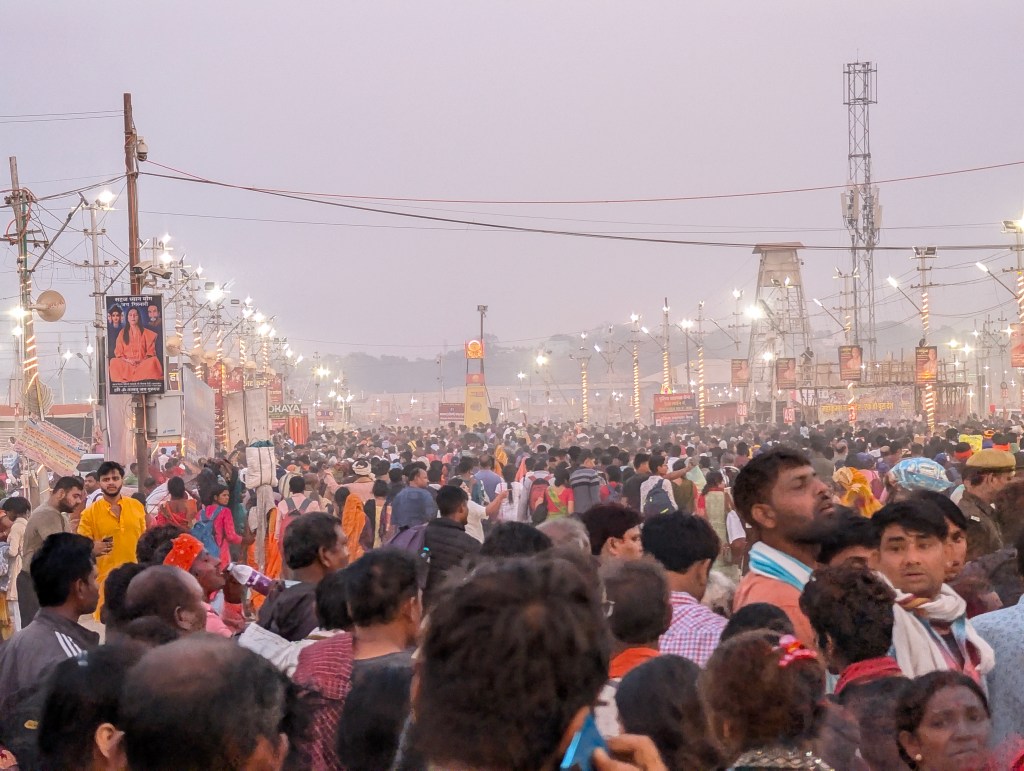
    Kumbh Mela provided me a first-hand experience of how faith influences millions of people.

    It showcased how ancient traditions shape modern spirituality and defies the boundaries of social structures… No matter what social structures we live in everyday life, Kumbh showcased just a mass of millions with no boundaries and division of thoughts and in reality, too. Everyone walking together to one unexplainable goal. It gave a strong sense on one-ness.

    Imagine, how would a culture have survived for thousands of years otherwise?

    Kumbh is held at the bank of rivers. The one that I attended (Kumbh 2025) was on a conflux of 3 rivers- Ganga, Yamuna and Saraswati called as the ‘Triveni Sangam‘ (Confluence of 3 rivers).

    People called it Triveni Sangam (Confluence of 3 rivers)… But I could see a fourth one flowing – The Sanskruti (Culture/Way of life). Isn’t it gushing like a river? Uninterrupted, through our lives to merge into the sea of thoughts and emotions sometimes forming pearls of wisdom for a lucky few.

    Hinduism has grown and flourished around nature. Many of its festivals are meant to be the reminders to go back to nature and get humbled by it. Kumbh Mela is to worship the mother river that is nurturing the living world in the Indian subcontinent from ages. It’s a gathering to remind ourselves about the dependence of our lives on rivers. Be humble and rekindle our love for nature.

    Isn’t that a reason enough why Kumbh Melas happen on the riverbanks and not at any other random place?

    Want to know Kumbh from mythological angle?

    The story of Samudra Manthan (Churning of the ocean) is one of the most fascinating episodes from Hindu mythology, found in the Bhagavata Purana, Vishnu Purana, and Mahabharata. Kumbh Mela has a deep connection to the mythological event of Samudra Manthan

    Fast forward version of the story goes – The Devas (Gods) and Danavas (Asuras/Demons) performed Samudra Manthan (Churning of the ocean) in pursuit of immortality and divine wisdom. A lot of treasures emerged out of this churning along with the Halahala poison. Shiva consumed it to save the world. This event gave him the name Neelkanth (Someone with a blue neck). When Dhanvantari, the divine physician, appeared out of the churning carrying a Kumbh (pot) of Amrit (nectar of mortality), a fierce battle broke out between the Devas and Asuras over its possession. It is believed that there are four places where the Amrit (nectar) drops were spilled from the pot. This grand festival of Kumbh (Pot) Mela is celebrated every 12 years at one of these four different locations in India—Prayagraj, Haridwar, Ujjain, and Nashik.

    Hindu scriptures are full of Similes used to create a visual image in the reader’s mind…. This story of Samudra Manthan (Churning of ocean) symbolizes the quest for immortality and spiritual awakening.

    Churning (Manthan) represents effort and perseverance—to achieve greatness

    The poison (Halahala) represents challenges in life—we must face them with courage, just like Shiva.

    Devas and Asuras represent the quality of life—good and evil are part of existence, but ultimately, righteousness prevails.

    Amrit (Nectar) signifies eternal wisdom and spiritual enlightenment—attained only through patience, teamwork, and divine grace.

    People do not seem to be unaware of the hidden meaning, but they strongly believe in this story. Observing rituals, prayers, and mass devotion offer us insights into the psychology of belief and how it translates into religious experience.

    Involvement of Sadhus, Yogis, Aghori Sadhus and Naga Worriers is another perspective of the Kumbh Mela that gives it its mystic feel. The powerful and ancient sects of sadhus (saints) and ascetics form various Akharas (groups). The Akharas are monastic orders of Hindu ascetics, originally formed to preserve, protect, and spread Sanatan Dharma (Hinduism). They play a central role in the Kumbh Melas. These sects believed to have historically trained warriors (Naga Sadhus) to defend Hinduism against invaders and uphold spiritual and martial traditions.

    These organizations follow strict spiritual disciplines, martial traditions, and ancient Sanatan Dharma (Hinduism) teachings. During Kumbh Mela, they lead the Shahi Snan (Royal Bath), which is considered the most sacred event of the festival… I got to see only a few of them during my visit just enough to fulfil my curiosity.

    How about some astronomy?

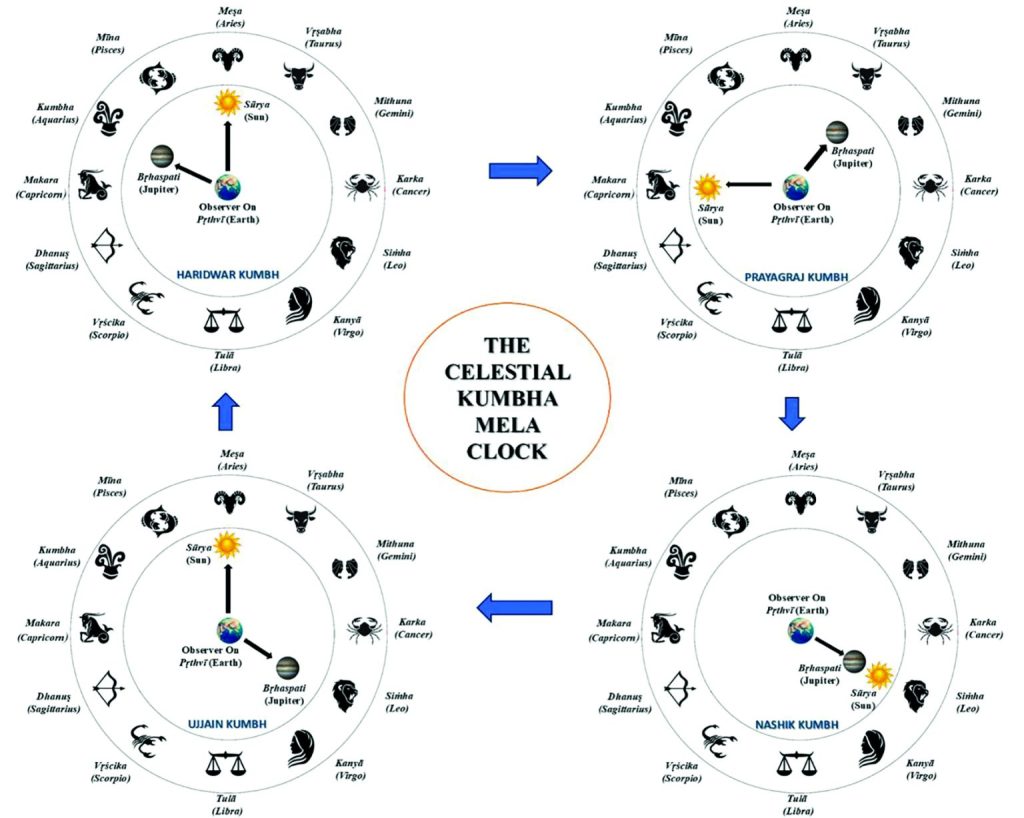
    Well, I had no idea before I started reading about Kumbh Mela. Astronomy plays a crucial role in determining the timing, location, and spiritual significance of the Kumbh Mela. The festival is deeply rooted in celestial alignments and follows ancient Vedic traditions that connect planetary movements with spiritual energies.

    According to Hindu astrology, Jupiter (Guru/Brihaspati) represents wisdom and divine guidance. Its position is crucial in determining the spiritual potency of the Kumbh Mela. Indian astrology divides the observable sky in 12 areas, each dedicated to a zodiac sign (Rashi). The timing and location of Kumbh Mela are decided based on the positions of the Sun, Moon, and Jupiter (Guru/Brihaspati) in different zodiac signs.

    Kumbh Mela is not simply held at random intervals. Its intricate schedule hinges on a meticulous interplay between the Sun, the Moon, and the planet Jupiter, all observed within the framework of the Hindu lunisolar calendar. Scripters explain it all.

    One such reference, especially relevant for Kumbh Mela 2025 is below-

    मेष राशि गते जीवे मकरे चन्द्र भास्करौ अमावस्या तदा योगः कुम्भख्यस्तीर्थ नायके

    According to the Skandha Purana, when Jupiter is situated in Aries and the Moon and the Sun are in Capricorn, then Kumbh takes place in the holy place of Prayagraj.

    Ref: KUMBH MELA A LIVING CLASSROOM FOR POSITIONAL ASTRONOMY – ScienceIndiamag

    I was amazed to read about the level of understanding our ancestors had about astronomy thousands of years ago.

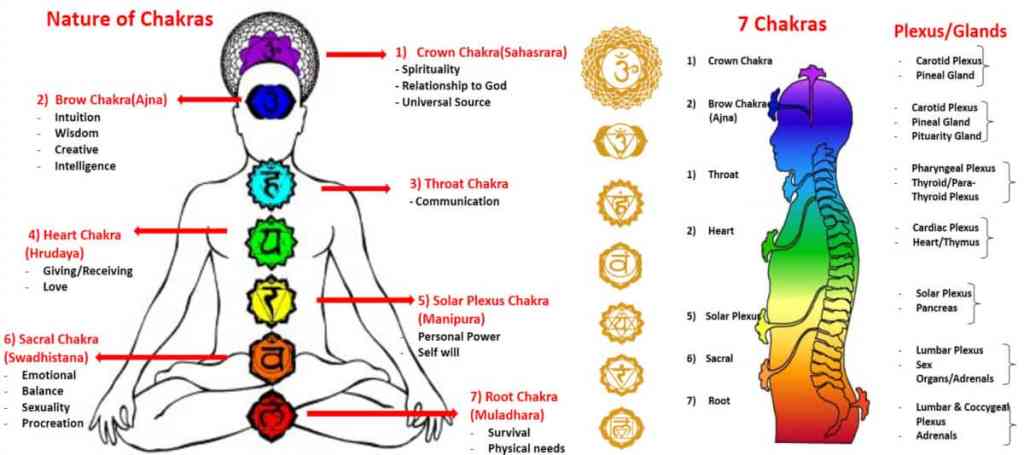
    Do you know why it is believed by many that Kumbh may lead one on the path of Moksha?

    Yogis and others who follow Yoga believe that our body has seven power houses or energy centers.

    The energy around due to planetary position, the meditation, spiritual practices and knowledge exchange with the Yogis at Kumbh are also supposed to help awaken and balance the body’s four important chakras that help Yogis reach enlightenment- Sahastrar Chakra (Crown Chakra), Adnya Chakra (Third Eye Chakra), Anahat Chakra (Heart Chakra) and Manipur Chakra (Solar Plexus Chakra/Neval Chakra).

    Ref: From Myth to Science: Unveiling the True Origins of Chakras – the Conscious Vibe

    Another most popular perspective of all is- Visit Kumbh if you wish to wash all your sins (on a lighter note – and get ready to do more once your account balance is nil! :D)

    People believe a dip in the Sangam (Confluence) brings good luck and washes all your sins. Visiting Kumbh helps you align with your own self in a spiritual angle. After all, according to Hinduism, we are not humans with spiritual experience but spiritual beings with human experience and our goal is to attain total spiritual awakening- that is- Moksha (Nirvana).

    Well, who knows what is Moksha and how Kumbh helps reaching there? At least I don’t. If attending Kumbh means to take time out to pause and introspect, if it means taking off the mask one wears to portray oneself in the world, if it means to confess in mind about the wrongdoings one has done in life, if it means to plan living remaining life with hope and positivity, if it means to take an opportunity to make a conscious decision on taking the righteous path- Then, in my opinion, one has certainly taken one step towards Moksha…

  • The Agnostic at Kumbh (Part 2)

    About 600 million people visited during the MahaKumbh in the year 2025.

    Why are you even thinking of going to such a place? Are you not worried if the place would be clean? How about waste management! Wouldn’t it be a disaster? Kumbh is not that important, the hype is created by the ruling political party, one stampede happened, what if another happens? Where will you stay? Isn’t it super crowded? You will be stuck in traffic jams, what if the Kumbh starts some sort of pandemic?

    Rolling eyes and many questions were pointed at me before I finally started.

    I am not sure what majority felt and observed. I am just noting an account of my personal experience. There is no claim that I intend to make that these experiences were generic.

    I was lucky enough to get access to a comfortable and quick flight that landed me in Prayagraj- the host city itself.

    Even though there was certainly a possibility of getting stuck in the traffic jams out in the city, we could get pass through and reach the place near MahaKumbh Mela. A huge parking space welcomed us. We were informed that entry to the vehicles was restricted in certain areas. Our first pilgrim walk started from the parking area to the tent where we were supposed to stay.

    Our entry to the ‘Kalagram‘ (Art Village) on foot mesmerized me.

    During Mahakumbh 2025, a huge area in the Prayagraj city on the bank of the Sangam (Confluence) was temporarily developed as Kalagram (Art Village).

    It was a vibrant showcase of India’s rich cultural heritage. This sector was designed to highlight Indian handicrafts, cuisine, performing arts, and traditions, offering visitors an immersive experience through exhibitions, performances, and interactive zones. The idea was bringing together diverse artistic expressions allowing visitors to experience India’s cultural diversity and promote tourism.

    I lived at a grand tent house at the art village… so far from the concept of a yogi life!

    Moving on…

    Temporary but quite huge and organized free hospital camps were built in the Kalagram for social welfare. We did contribute a bit and offered some volunteering.

    I visited the camp setups created for the specially abled people and witnessed free wheelchair distribution, prosthetic organ consultation (and may be even distribution).

    Rapid development and management of such facilities provided confidence to me as a citizen that my country is in a good position to manage not only grand events but survive possible future natural or man-made calamities.

    MahaKumbh was an example of event management. With successes and failures in the process, I am sure the respective teams have gathers mammoth experience.

    MahaKumbh and the Kalagram obviously provided a platform for many to engage in intellectual discussions with spiritual seekers, philosophers, and scholars at spiritual camps for those who wanted. We saw camp boards for various Ashramas, Sikh and Jain communities too. There was also a Tirupati Balaji temple set, quite real… At some places, free shelters were provided to the pilgrims.

    Walking the long walks to the riverbank was such an experience! Crowds chanting hymns, people carrying kids on the shoulders, families holding hands together, hundreds of hands in the air raised not only for worship but also to capture photos and selfies!!

    There were hawkers on both sides of the long roads pitching and promoting grabbing attention of their customers (including me, not very much for the items on sell but more for their wacky offbeat (in a good way) Hindi dialect of Allahabad :D) to sell goods starting from food, books, toys, flowers and what not. It was quite a sight to take in all at once.

    Crowd of 600 million people are capable of creating a major mess. But, if not squeaky clean- the Prayagraj city, the riverbanks and the water were close to not polluted.

    The machines were straining the flower and other offerings from the river water to keep the water clean. (One can clearly see the milky water from Ganga getting immersed in the clear water of Yamuna in the photograph below)

    Sanitation and waste management must also have been a mammoth task. I personally came across close to no instance where I had to witness mismanagement of waste or negligence of the crowd towards the topic of sanitation.

    Hats off to the tirelessly working cleaning staff sweeping the roads day and night.

    There was decent crowd management by the police through multiple check points.

    Talk about the crowd management and safety management on the river.. it was there!

    Indians reading my experience must have heard of the funny ‘Hum Kumbh ke mele me bichad gaye the‘ (We were separated in the Kumbh Mela) dialogue 😀

    Well, with so many people around, why is that not possible? However, it was a relief to witness the ‘announcements’ from lost and found booths placed literally at every corner.

    I felt proud that, we, as a society are capable of A LOT if we submit to the cause.

    Was it all so up to the mark? Well, not really, we read news about a major stamped that happened in the beginning of the MahaKumbh. We also read in the news of about 1-2 instances of fire in some shops. If you ask some local resident who did not gain money or employment out of Kumbh, I am sure the experiences would be frustrating. It must have put a very high strain on the resources of the city. People living around must have asked only one blessing at Kumbh Mela – ‘Give us our normal life back!!!’ All very unfortunate, for sure.

    I experienced people finding opportunities to gain more money out of the business transactions, at times hundreds of vehicles on the roads honking tirelessly creating frustration and panic, There was no up to the mark display of boards on many places to show directions, I heard about some pickpocketing instances, in a few events, I experienced people lying and showing self-centeredness, private transport and boatmen charging a lot extra money for rides, People selling high priced food… the list goes on. I jokingly told a lady selling very expensive tea at a stall that, “I have never had such expensive tea in my life”, with an awkward face and innocent smile she said, “I know, even I go out to cheaper places to have tea. I have to sell at this price, it’s not my shop!”.

    It takes policies and organizational structures to run a corporation where good and bad is controlled at minutest levels. But Kumbh, to a great extent, an event that gets driven by self-inspiration and motivation of masses. We have to accept the good and the bad and register both.

    Taking a boat ride at the Triveni Sangam (Confluence of 3 rivers) in Prayagraj early in the morning was one of the most divine and mesmerizing experiences for me. The milky white Ganga meets the Yamuna with deep blue but clear water. One can see the clear distinction of the two flows of water. Somewhere, the Saraswati that flows underground unites with the rivers on the ground. This confluence forms a grand river channel.

    Birds flying on the river on the backdrop of the beautiful Allahabad fort and old temples altogether carved an image on the mind.

    The boat ride not only offered breath-taking views of the vast Kumbh gathering on the riverbanks but also provided peaceful spiritual moments of reflection.

    The dip in the water and moments of tranquility gave an opportunity to wish for a happy and healthy life for loved ones.

    Moving on, this MahaKumbh was not just a religious or cultural event; it was also a major economic powerhouse that generated massive financial activity in multiple structured business sectors like travel and tourism, food industry, retail, handcraft, etc. It generated employment for thousands.

    There was massive increase in turnover in the unstructured economic sector. I am sure it gave a boost to the local businesses. The roadside hawkers and small unregistered businesses flourished. My casual conversations with such business personnel gave me insights on how the Kumbh Mela has given them opportunities to thrive and with the economic surplus created in short period of time, how their lives will go on becoming better. One such person I talked to was planning to buy a new 2-wheeler vehicle which would help him in his profession. Other was going to be able to pay school fees for kids. Some mentioned that, with the surplus money earned, their daily food expenses would be taken care of for months and the energy can now be focused in finding a better job.

    Last and the best-

    Not only the Sangam (Confluence) of the rivers but one more Sangam (Confluence) existed that made this MahaKumbh more fascinating for me. The Sangam (Confluence) of culture (way of life), religion and technology.

    Digital Kumbh transformed the pilgrim experience.

    The light and laser shows, Screens put up in temporary setups build to show short films on the mythology, astrology related to MahaKumbh. Exhibition showcasing artistic photographs captured at various Kumbh Melas. VR type of setups to give you a feel of the river ghats, display of the detail information on various Akharas, planetary positions! I was a kid in the candy store.

    Well, isn’t Kumbh to internalize thoughts, travel inside your own mind, introspect, have Yogic experiences? – one may ask.

    Doesn’t attachment to material pleasures creates desires, which in turn cause suffering? Was I not supposed to go away from the indulgence at Kumbh? Well yes, but here I was, enjoying all of it…

    Luckily, Hinduism at its core is one stop shop for all. It lets you understand the world in your own way and infer based on your experiences. So, why not have some digital entertainment on the side for a few who are looking to reach their destiny by taking other route? (On a lighter note- Looks like I am not ready yet, I need a few more lives to reach to the no-indulgence state of mind :))

    Apart from the use of technology for entertainment, it was also used in managing the event. CCTV to drone monitoring, live streaming, virtual darshans to helicopter darshans, AI & Smart surveillance for crowd management, digital payments, phone apps to navigate through Kumbh– the event set a new benchmark for religious tourism in India.

    This experience helped me reassure that you can be a part of modern advancements without letting go the grip on the roots.

    I am sure the world would look at this Kumbh Mela as an unparalleled case study with multiple intriguing aspects like spirituality, management, economics, technology, sociology, anthropology and event management

    Personally, for me, the Kumbh Mela was a living museum of India that I would love to visit again…. and who knows, I may find my road to enlightenment in the next one!

    References:

    Kumbha_Parva_Mahatmya_By_Kapil_Dev_Dwivedi_1986_Gyanpur_Vishw_Bharati – Adobe cloud storage

    KUMBH MELA A LIVING CLASSROOM FOR POSITIONAL ASTRONOMY – ScienceIndiamag

    From Myth to Science: Unveiling the True Origins of Chakras – the Conscious Vibe